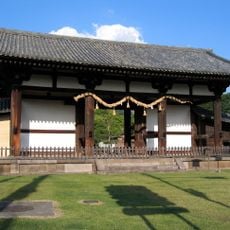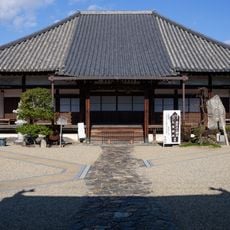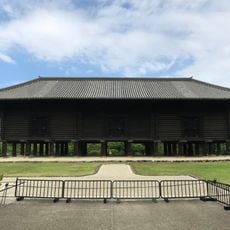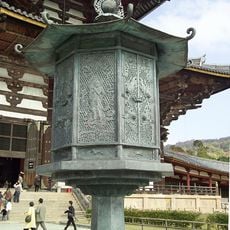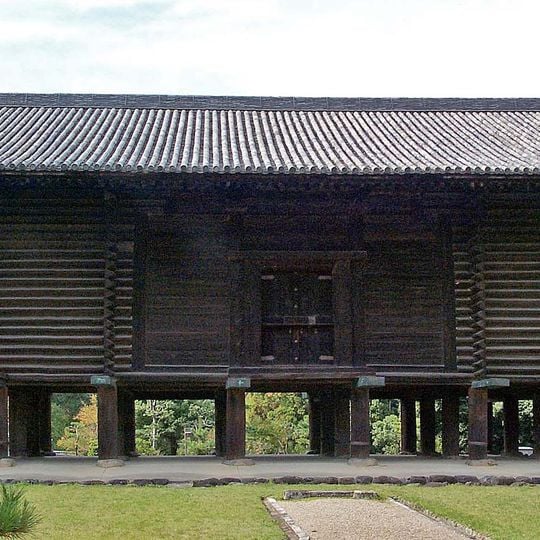
Shōsōin, Wooden treasure house in Nara Park, Japan
Shōsōin is a raised log storehouse northwest of the Great Buddha Hall at Tōdai-ji, built in azekura-zukuri style with triangular corner beams joined without bolts or nails. It measures 33 m long, 9.3 m deep and 14 m high, its floor lifted about 2.5 m on posts set on stone bases beneath a roof of grey cylindrical tiles.
Empress Kōmyō founded the repository in 756 by dedicating over 600 items to the Great Buddha at Tōdai-ji Temple. Since 1962, the objects formerly kept here have been moved to two reinforced concrete buildings at Nara National Museum.
The name Shōsōin originally meant a storehouse for tax rice and cloth; only Tōdai-ji's survived, making it a proper noun. Each autumn, selected treasures are shown at the Nara National Museum. The 8th-century documents, including censuses and tax records, were rediscovered in the 1830s by Hoida Tadatomo.
The building is not open to visitors, but you can view it from the outside and appreciate its construction method. Nara Park is centrally located and easy to reach on foot from most landmarks in the city.
The northern section of the warehouse remains permanently sealed and can only be entered by members of the Japanese imperial family. The elevated construction with a clearance of 2.7 meters (about 9 feet) above ground protects objects from moisture and pests.
The community of curious travelers
AroundUs brings together thousands of curated places, local tips, and hidden gems, enriched daily by 92,345 contributors worldwide.