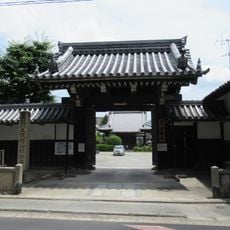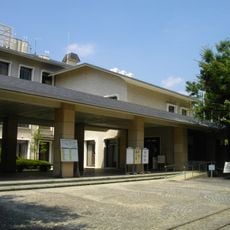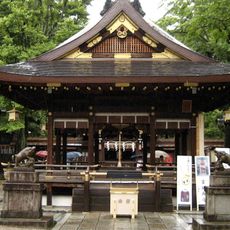
Nashinoki Shrine, Shinto shrine in Kyoto Prefecture, Japan
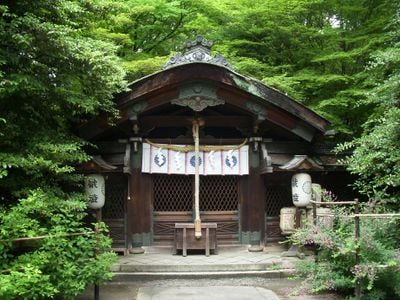
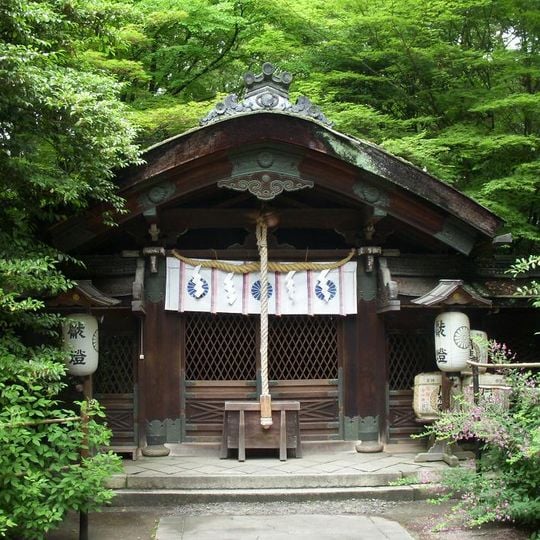
Nashinoki Shrine is a Shinto shrine in the Kamigyō-ku ward of Kyoto, founded in 1885 on the site of the Sanjō family residence. Its wooden worship hall has a steep curved gable, carved eaves and a twisted straw rope with four white paper streamers. About 500 bush clover plants grow in the grounds, and the site is also known as Hagi no Miya.
The shrine was founded on 10 October 1885 on the site of the Sanjō family residence, named after the old Nashinoki-chō district and ranked as a special government shrine. It enshrined Sanjō Sanetsumu; his son Sanjō Sanemi was added in 1915 to mark the Taishō Emperor's accession. In 1977 it was bombed by anti-monarchists, and in 2013 it left the Association of Shinto Shrines over a land-lease dispute.
The shrine is also called Hagi no Miya for the roughly 500 bush clover plants in its grounds, and a Hagi Matsuri is held from mid to late September. The name Nashinoki comes from the old Nashinoki-chō place name, not from a tree. Two song monuments stand on the grounds, inscribed by Ueda Akinari and Yukawa Hideki.
The shrine stands at 680 Someno-cho, Teramachi-dori Hirokoji-agaru, Kamigyo-ku. The nearest stop is the Kyoto City and Kyoto bus stop "Furitsu Idai Byoin-mae", one minute on foot; Demachiyanagi Station on the Keihan Oto Line is about 17 minutes away. The well water Seni-no-mizu is drinkable.
The name does not come from a pear tree: it was taken in 1885 from the old place name Nashinoki-chō, now Sotoden-chō. The shrine is also called Hagi no Miya for the roughly 500 hagi shrubs in its grounds, and a Hagi Festival is held in mid to late September.
The community of curious travelers
AroundUs brings together thousands of curated places, local tips, and hidden gems, enriched daily by 94,369 contributors worldwide.