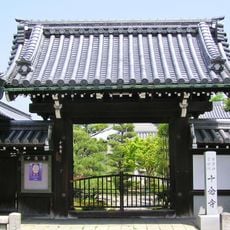
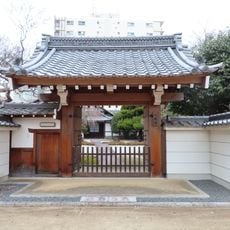
Shōkoku-ji, Zen Buddhist temple in Kamigyō-ku, Kyoto, Japan.
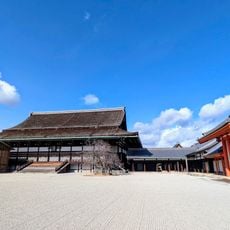
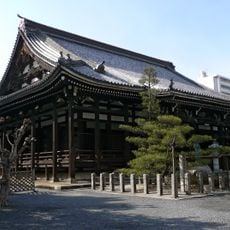
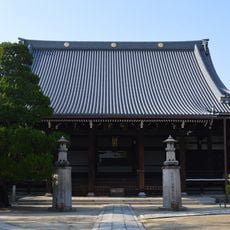
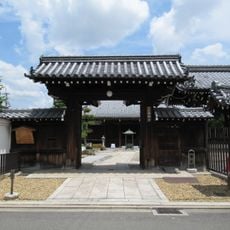
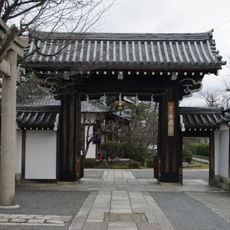
Shōkoku-ji is a Rinzai Zen temple in Kamigyō-ku, Kyoto, directly north of the Imperial Palace. Its Hattō (Dharma Hall), rebuilt in 1605 by Toyotomi Hideyori, is Japan's oldest building of its type, with a dark timber facade, paper screens, and grey tile roofs. A stone-paved walkway leads to the hall, and a small red sign stands at the left edge of the facade.
Ashikaga Yoshimitsu, the third shogun of the Muromachi shogunate, founded this temple in 1382 as a center for Zen study and monastic life. The grounds suffered heavy damage during the Ōnin War in the 15th century but were rebuilt in the following centuries.
The temple's name combines the Chinese title "shogun" held by Ashikaga Yoshimitsu as Left Minister with the Ming dynasty's Daishogun-ji, the first temple of the Five Mountain system. It heads the Shōkoku-ji branch of Rinzai Zen with over ninety affiliated temples, including Kinkaku-ji and Ginkaku-ji. The Hattō's dragon ceiling, painted by Kanō Mitsunobu, is called the "Crying Dragon" because clapping hands under it produces an echo.
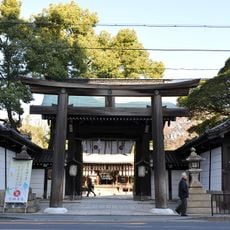
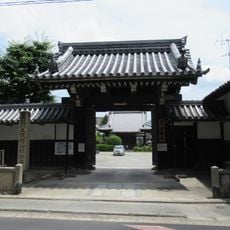
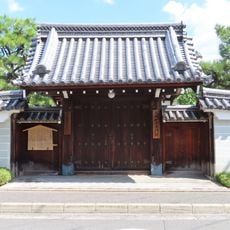
The main entrance sits a short walk from Kyoto Gyoen park and can be reached through narrow streets that wind through residential areas. Some of the sub-temples open only during certain seasons, so it helps to check which sections are accessible before visiting.
Two famous temples, Kinkaku-ji and Ginkaku-ji, began as villas for the Ashikaga family and were later converted into sub-temples of this complex. Both buildings still carry the formal connection to this site, even though they are known as separate attractions today.
The community of curious travelers
AroundUs brings together thousands of curated places, local tips, and hidden gems, enriched daily by 93,783 contributors worldwide.