Mount Moriyoshi, Dormant volcano in Kitaakita, Japan.
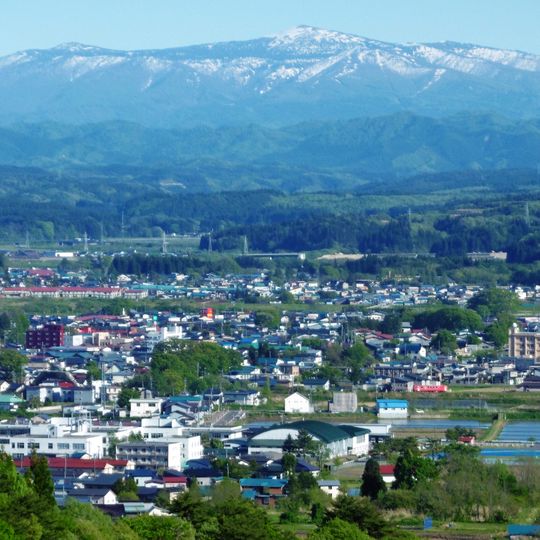
Mount Moriyoshi is an old volcano in Kitaakita, Akita Prefecture, reaching 1,454.2 m. Its first eruption built the outer rim peaks Ichi-no-koshi, Maedake and Ishimori; a second eruption formed Mukaidake, the present summit. The summit ridge keeps snow into spring in patches that look like the spots of a dairy cow. It is also called Mukaidake or Akitayama.
Mount Moriyoshi is an old volcano whose last eruption is estimated to have occurred between 1.1 million and 700,000 years ago. Its first eruption built the outer rim peaks Ichi-no-koshi, Maedake and Ishimori; a second eruption formed Mukaidake, the present summit. No historical record of any eruption exists.
Locals know the mountain as Akita-yama, and the summit ridge of Ichinokoshi, Maedake and Ishimori shows snow patches in spring that people liken to a spotted cow, called madarabeko in the local dialect (beko meaning cow). Near Maedake stands Mori-yoshi Shrine, whose sacred object is a piled boulder, the Kanmuri-iwa, with a gap visitors can crawl through.
A gondola system provides regular transportation from the lower station to the summit area. This lift service operates during daylight hours and offers an easy way to reach the upper slopes without strenuous climbing.
The frost-covered trees called juhyo on the summit ridge are among Japan's three great juhyo sites, seen from early January to early March at Juhyo-daira, a five-minute walk from the Ani gondola's summit station. In late spring the residual snow on the ridge of Ichinokoshi, Maedake and Ishimori forms patterns likened to the spots of a dairy cow, called madarabeko in the local dialect.
The community of curious travelers
AroundUs brings together thousands of curated places, local tips, and hidden gems, enriched daily by 94,250 contributors worldwide.