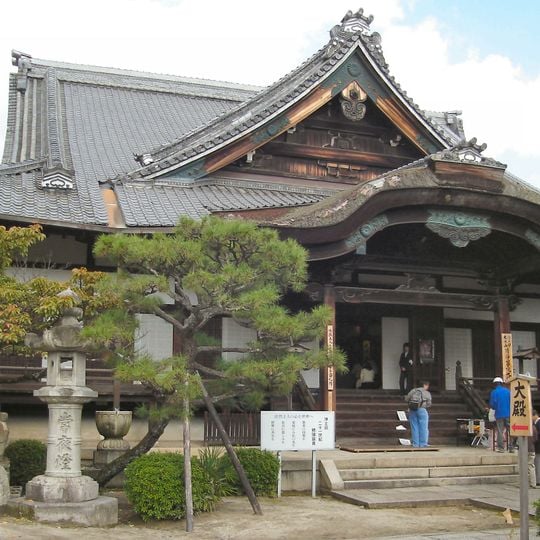
Shōjōke-in Temple, Buddhist temple in Kamigyō-ku, Japan
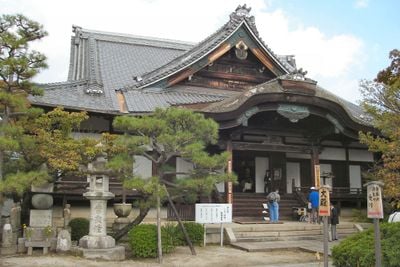
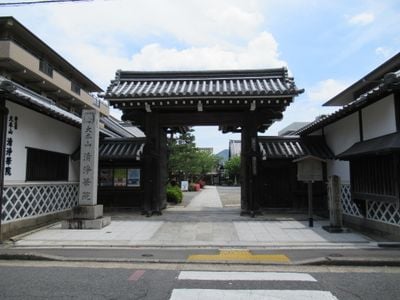
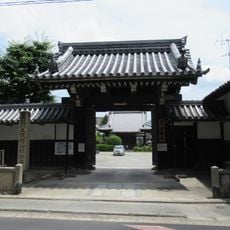
Shōjōke-in is a Pure Land Buddhist temple in Kamigyō-ku, Kyoto, with no mountain name. Its main hall, the Mieidō, faces south and houses a portrait of Hōnen; the hall was rebuilt in 1911. A wooden gate stands between white-walled buildings, and a stone pillar at the gate reads "Daihonzan Shōjōke-in."
According to temple tradition, Ennin founded it in 860 as a chapel within the imperial palace, and it later became a Pure Land temple under Hōnen. The first documentary evidence dates from the Kamakura period: Kōa Shōken received a temple in 1302 and renamed it Jōke-in. It moved to its present site in 1573–1592 under Toyotomi Hideyoshi's urban plan.
The temple's name means "pure lotus flower," since it stood inside the imperial palace and, to avoid the pollution of death, held no funerals. Its crest is a chrysanthemum with leaves, a modified imperial emblem. The main image is a portrait of Hōnen, said to be carved by himself around age 42.
The temple sits in a residential neighborhood and is reachable within a short walk from a nearby bus stop. Visitors should plan to arrive early in the day to see the artworks clearly and have time to explore the halls without rushing.
The temple's name, meaning a pure training hall like a clean lotus, comes from its former site inside the imperial palace, where funerals were avoided to keep death pollution away. Its crest is a chrysanthemum with leaves added, a modified form of the imperial chrysanthemum.
The community of curious travelers
AroundUs brings together thousands of curated places, local tips, and hidden gems, enriched daily by 93,446 contributors worldwide.