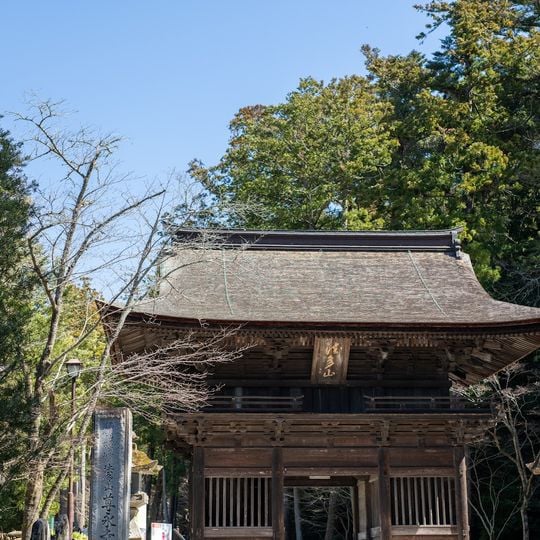
Son'ei-ji Temple, Buddhist temple in Fukuroi, Japan
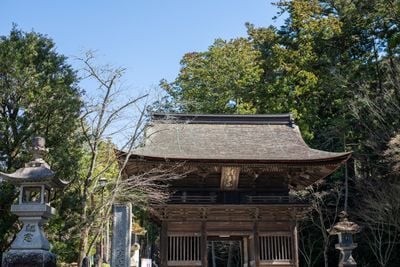
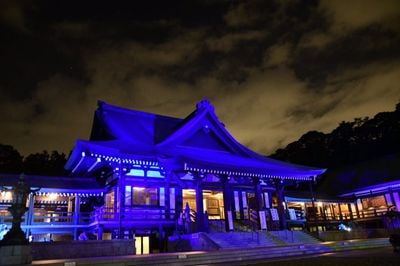
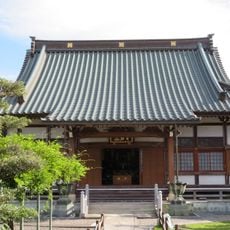
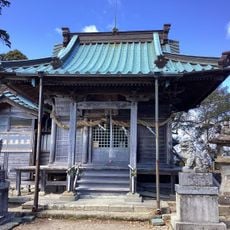
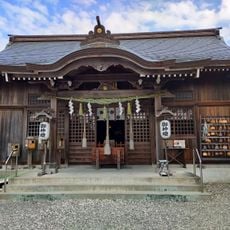
Son'ei-ji is a Shingon temple of the Kōyasan branch in Fukuroi, Shizuoka Prefecture, known by its mountain name Hatta-san. Its main hall, rebuilt in 1983 after a fire, has a steep dark metal roof with a triangular gable and a row of white blocks under the eaves. The Muromachi-period Niō gate is a two-storey tower gate with a hip-and-gable roof, designated an Important Cultural Property.
Gyōki founded the temple in 725 on the orders of Emperor Shōmu. From the Middle Ages the Imagawa clan protected it, and in 1590 Toyotomi Hideyoshi confirmed its 205-koku estate, a holding maintained by the Tokugawa shoguns until the end of the Edo period. A late-Edo fire destroyed the main hall, rebuilt in 1983.
The temple belongs to the Kōyasan Shingon school and is known as Hattasan, its mountain name, rather than by its formal name Son'ei-ji. Its main image is the Shō Kannon, venerated for protection against misfortune, and the temple sells yakuyoke dango, rice dumplings that Tokugawa Iesada named kushi dango. On 7 January the Taue-sai, a harvest ritual, is performed.
Son'ei-ji is about a 20-minute walk or 5-minute drive from JR Aino Station on the Tōkaidō Line. The Enshū Railway bus to Hattasan was discontinued on 31 March 2019, so from Fukuroi, Aino or Kakegawa stations the temple recommends taxis. At New Year, extra direct buses run from Fukuroi Station, taking 15 minutes or up to an hour in traffic.
The temple's famous Hatsuuma dango were named "kushi dango" by Tokugawa Ieyasu's successor, shogun Tokugawa Iesada. The sweet rice dumplings remain the signature souvenir sold to pilgrims visiting the Kannon hall.
The community of curious travelers
AroundUs brings together thousands of curated places, local tips, and hidden gems, enriched daily by 94,659 contributors worldwide.