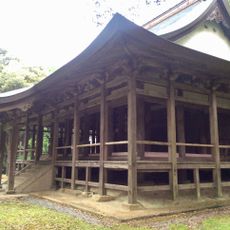
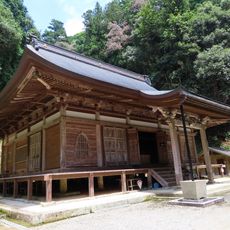
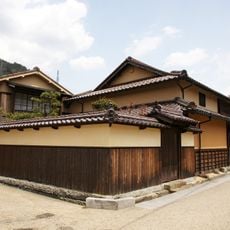
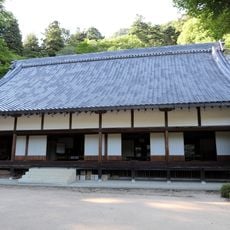
Hōraku-ji, Buddhist temple in Kamikawa, Japan.
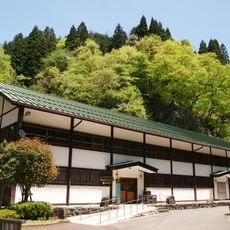
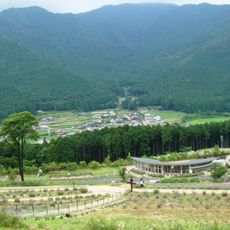
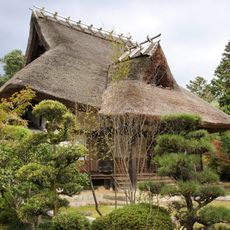
Hōraku-ji is a Shingon Buddhist temple of the Kōyasan branch in Kamikawa, Hyōgo Prefecture. Its main hall, rebuilt in 1729, enshrines an Eleven-Faced Thousand-Armed Kannon. A 246-step stone stairway climbs from the Niō gate to the main hall, and the grounds also hold a Kasuga Shrine hall with a persimmon-wood bark roof.
According to the Engyō shakusho and the Hōshō-ki, the temple was founded during the reign of Empress Kōgyoku (642–645) by the local magnate Maibu Chōja, with Hōdō as founding monk. The Nio-mon gate is said to have been rebuilt in the Tenshō era, and the main hall was rebuilt in 1729 during the Kyōhō era. The kuri dates from 1819.
The temple is known as Awaga Inu-dera, or the Harima Dog Temple, after the "Banshū Inu-dera Monogatari" tale set at its founding; the story was recorded in the 1322 Buddhist history Genkō Shakusho by the Nanzen-ji monk Kokan Shiren, who listed it among Japan's thirty temples. The main image is an Eleven-faced Thousand-armed Kannon. The temple is the 15th stop on the Harima Saigoku Thirty-three Kannon pilgrimage.
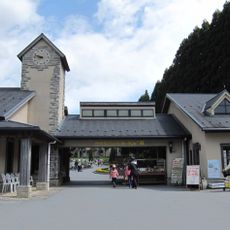
From JR Bantan Line Teramae Station, take a Shinki Green Bus for about 10 minutes and get off at Awaga Eigyosho; the temple is a 10-minute walk from there. Once inside the Nio-mon gate, 246 stone steps lead up to the main hall, so allow time for the climb. The main hall, Kasuga Shrine hall, Kuri and Nio-mon are designated cultural properties.
The temple is also known as Awaga Inu-dera, or the Harima Dog Temple, after the story of its founding recorded in the 1322 Buddhist history Genkō Shakusho by the Nanzen-ji monk Kokan Shiren. The tale made the temple famous in earlier centuries and is why it appears among the thirty Japanese temples introduced in that work.
The community of curious travelers
AroundUs brings together thousands of curated places, local tips, and hidden gems, enriched daily by 93,521 contributors worldwide.