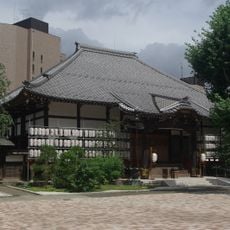
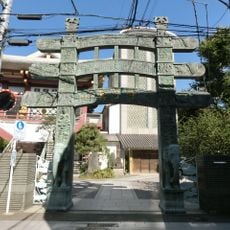
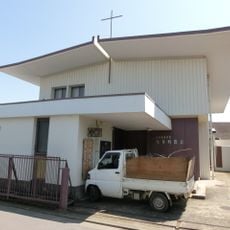
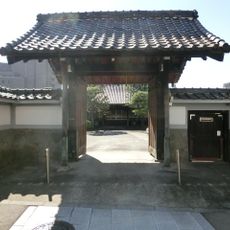
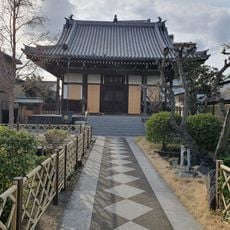
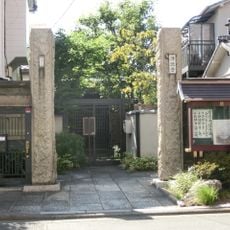
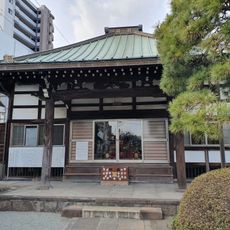
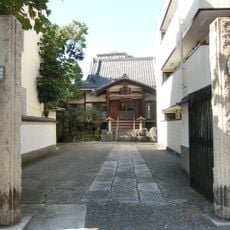
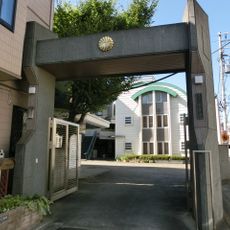
Kaian-ji, Buddhist temple in Minami-Shinagawa, Japan
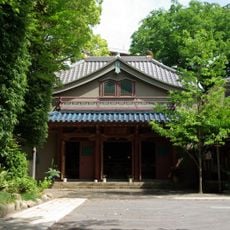
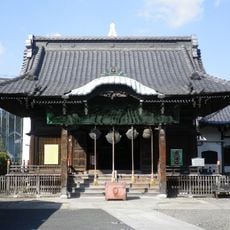
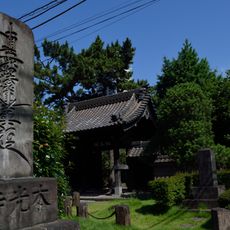
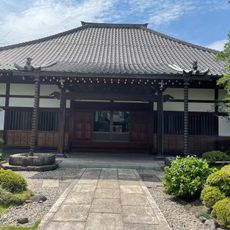
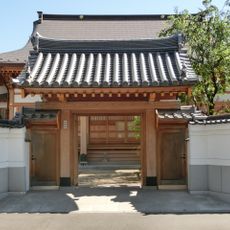
Kaian-ji is a single-structure temple in Minami-Shinagawa, Tokyo, with the mountain name Fudarakusan. Its main image is a statue of Sho Kannon, and the temple was founded in 1251 by the Zen monk Lanxi Daolong under the patronage of Hōjō Tokiyori. The grounds contain the temple hall and a cemetery with graves of figures such as Iwakura Tomomi and Matsudaira Shungaku.
The temple was founded in 1251 and served as a center for intense Zen practice during Japan's medieval period. Over centuries, its orientation shifted and it became affiliated with the Soto-shu Sect, a major lineage of Zen philosophy.
The main image, a Kannon statue, is said to have come from the belly of a shark caught off Shinagawa, and the area name Samezu derives from that tale. The temple was long known for its autumn maples, alongside the cherry trees of Gotenyama. Today the grounds hold the graves of figures such as Iwakura Tomomi and Matsudaira Shungaku, and some grave areas are closed to those without a temple connection.
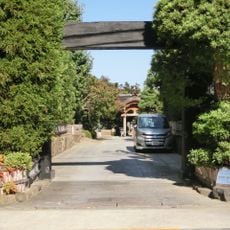
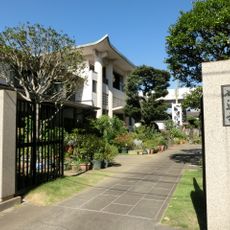
Visitors can explore the grounds, though some areas may have restricted access at certain times and respectful behavior is expected throughout. Coming early in the day helps you enjoy quieter moments in the gardens and find space to reflect.
The name of the surrounding district, Samezu, is said to derive from the temple's principal Kannon image, which legend holds was found inside a shark caught off the Shinagawa coast. The temple also holds the graves of figures such as Iwakura Tomomi and Matsudaira Shungaku, though the inner burial ground is generally closed to non-parishioners.
The community of curious travelers
AroundUs brings together thousands of curated places, local tips, and hidden gems, enriched daily by 94,830 contributors worldwide.