Hanifu-jinja, Shinto shrine in Japan
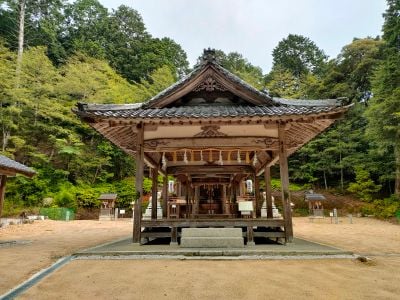
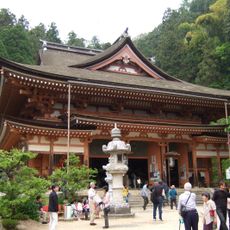
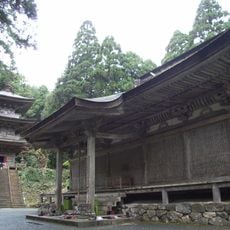
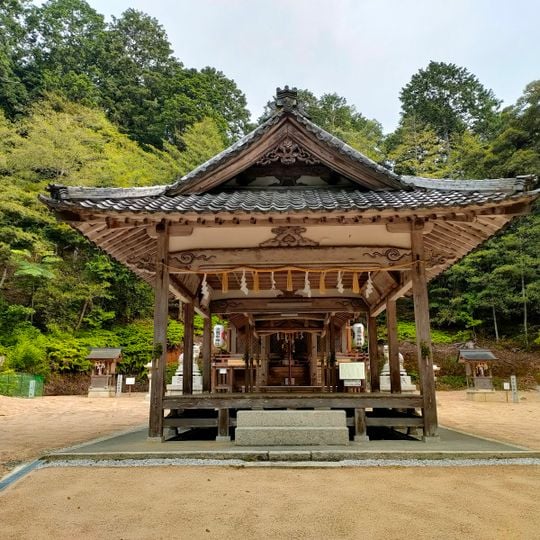
Hanifu-jinja is a Shinto shrine in the Aiba district of Shin-Asahi, Takashima, Shiga Prefecture, also called Habu Daimyojin or "Habu-san". It enshrines Haniyama-hime-no-mikoto and Mizuhanome-no-kami, and its shrine crest is the thousand-ripe gourd. It is a shikinaisha, a shrine listed in the Engishiki register, and served as the tutelary shrine of Kizu-no-sho.
The shrine's founding date is unknown, but its tradition holds that Myōtowanome was worshipped there since ancient times and that Haniyama-hime was invited in 741 (Tenpyō 13) from the Tateshima-sojinmei Shrine in Awa Province, now Komatsushima, Tokushima. It is listed in the Engishiki register of shrines and served as the tutelary shrine of Kizu-no-shō. Many sacred objects were lost in the anti-Buddhist destruction of the Meiji period.
The shrine is also called Habu Daimyojin or "Habu-san", and its crest is the thousand-fruit gourd (sennari hyotan). Its spring festival was held on the second day of the ox in the second month until the Meiji era; today the annual rite falls on 20 April, performed by priests of nearby shrines such as Kensoku and Okuninushi.
The shrine stands in the Aiba district of Shin-Asahi, Takashima, near the former Kizu port site on Lake Biwa; the surrounding area also holds the Shin-Asahi Waterbird Center and the Kizu ancient iron-smelting remains. Its main festival is held on April 20, and the Niiname-sai on November 23. The grounds include the subsidiary Kumano Shrine and Nikishi Shrine, both listed in the Engishiki register.
The shrine's crest is the thousand-fruit gourd (sennari hyotan), and its grounds include two subordinate shrines listed in the Engishiki register: Kumano-jinja, dedicated to Kumano Kusuhi-no-mikoto, and Nikishi-jinja, dedicated to Oyamatsumi-no-mikoto and Ninigi-no-mikoto.
The community of curious travelers
AroundUs brings together thousands of curated places, local tips, and hidden gems, enriched daily by 94,044 contributors worldwide.