Inariyama Kofun, Keyhole-shaped burial mound in Takashima, Japan
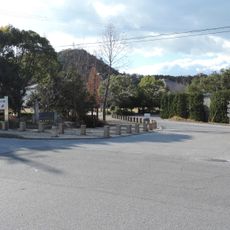
Inariyama Kofun, also called Kamo Inariyama Kofun, is a keyhole-shaped mound about 50 meters long with the rectangular front facing south. Its burial mound is gone, but the tuff sarcophagus carved in the shape of a house remains in a protective shelter on the spot where it was found in 1902.
Built in the first half of the 6th century, the mound was discovered in 1902 during roadworks, when a house-shaped tuff sarcophagus was unearthed. Kyoto Imperial University conducted the first full excavation in 1923. The burial goods suggest a close link to the Yamato court and to the Korean kingdoms of Daegaya and Silla.
The mound was long known as Inari-zuka, a shrine to Inari, and local tradition held that a mikoshi was buried there, which deterred villagers from digging it up. The name Inariyama preserves that earlier use. The burial goods, including a gilt-bronze crown, shoes and a fish pendant, are now kept at the Tokyo National Museum.
Visitors can reach the archaeological site by using public transportation to Takashima. Informational panels on-site explain the historical context and allow you to explore the mound's structure at your own pace.
The three prestige items found here — a wide-banded two-hill crown, a twisted ring-pommel sword and a three-leaf-pattern oval harness ornament — appear together at only one other kofun, Mozume Kurumazuka in Muko, Kyoto Prefecture. The set points to a tomb linked to the Yamato court, and the coffin was hauled over 100 km from Mount Nijo.
The community of curious travelers
AroundUs brings together thousands of curated places, local tips, and hidden gems, enriched daily by 93,500 contributors worldwide.