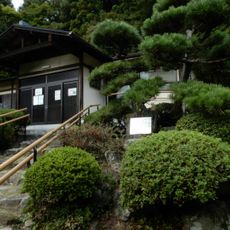
Dōun-ji, Buddhist temple in Izumi-ku, Japan.
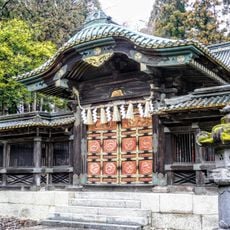
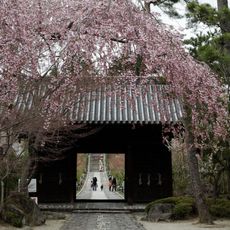
Dōun-ji is a Sōtō Zen temple in Izumi-ku, Sendai, with the mountain name Ryūmonzan and Shaka Nyorai as its principal image. Its main hall and mountain gate were rebuilt in reinforced concrete and celebrated in 2017 after the 2011 earthquake destroyed the previous concrete pillars. The temple also keeps a bronze bell cast in 1518.
Tradition holds that Dōun-ji was founded in 1338 by the monk Myōhō Sotetsu, and it was later revived with the support of the Kokubu clan after falling into ruin. Its bronze bell, cast in 1518, is inscribed with the temple's name and is a Miyagi Prefecture designated cultural property. The halls burned in a 1943 wildfire started by smoke from the Sendai Railway, were rebuilt in concrete, and were destroyed again by the 2011 Tōhoku earthquake; a new main hall and gate were completed on 9 May 2017.
The temple is also known as Sunayama-dera and belongs to the Sōtō school, with Shakyamuni as its principal image. Its bronze bell, cast in 1518 and bearing an inscription naming the Ōshū Miyagi district, is a Miyagi Prefecture designated tangible cultural property. Kept as a temple treasure are relics said to be a giant serpent's remains; examination showed them to be fossils: a Triassic ammonite as the serpent's body stone, Permian coral as its scales, a Miocene Carcharodon shark tooth as its fang, and a Miocene whale bone.
The temple stands at 2-3-1 Yamanotera, Izumi-ku, Sendai, in Miyagi Prefecture, north of the city centre. The main hall and mountain gate were rebuilt and celebrated in May 2017 after the 2011 earthquake destroyed the concrete pillars. Visitors should note that the temple grounds were cleared in 2011, so the current buildings are recent reconstructions.
The temple keeps a bronze bell cast in 1518, inscribed with the name Dōun-zenji and the era name Eishō 15; it was designated a prefectural tangible cultural property on 28 June 1962. The temple also holds relics said to be a giant serpent, identified as fossils: a Triassic ammonite, Permian coral, a Miocene shark tooth and a whale bone.
The community of curious travelers
AroundUs brings together thousands of curated places, local tips, and hidden gems, enriched daily by 93,521 contributors worldwide.