Sendai Tōshō-gū, Shinto shrine in Aoba-ku, Japan
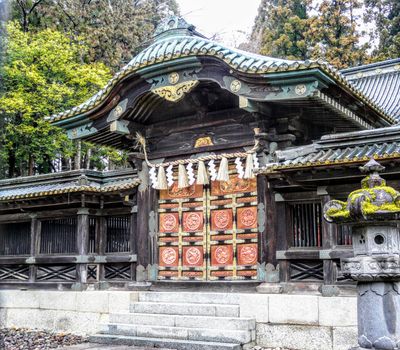
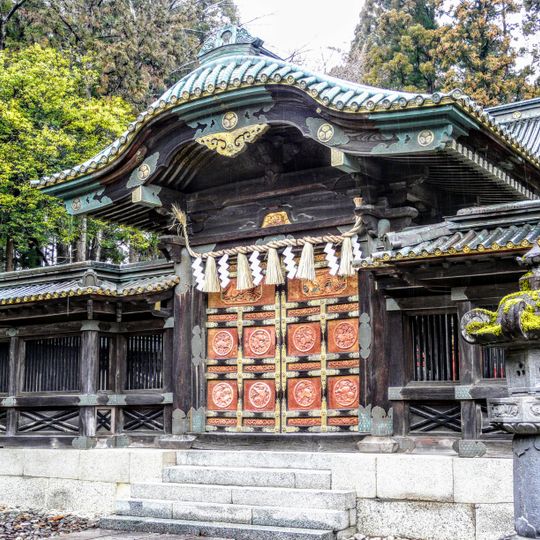
Sendai Tōshō-gū is a Shinto shrine in Aoba-ku featuring five buildings displaying traditional East Asian hip-and-gable roof architecture. The structures date to 1654 and include a main hall, gates, and decorative walls that preserve classical building methods.
Date Tadamune, second daimyo of Sendai Domain, petitioned shogun Tokugawa Iemitsu in May 1649 and began construction that August; the shrine was completed in March 1654. The project employed 834,835 workers and cost 22,443 gold ryō, with carpenter Umemura Hikozō no San as master builder. The kami was carried from Edo to Sendai in seven days on a portable shrine said to be the largest in Tōhoku, the origin of the Sendai Festival.
The shrine's name comes from Tōshō Daigongen, the deified name of Tokugawa Ieyasu. Since 1655 the Date clan set 17 September as the festival day, when the portable shrine was carried through the castle town. Today the spring festival on the third Saturday and Sunday of April features Sendai Tōshō-gū kagura, performed mainly by residents of Miyamachi and registered as an intangible folk cultural property of the city.
The approach runs from the stone torii up 49 shallow stone steps to the Zuishin-mon gate; from the top step the straight Miyamachi-dori stretches 1.5 km south. Behind the gate, 14 more steps lead up to the worship hall. The main hall itself is not open to the public, and the shrine is reached from Sendai Station by following Miyamachi-dori north.
The main hall's decorative metal fittings come in two copper thicknesses: some date from the 1654 construction, others were replaced during a repair in 1765. A repair inscription found behind a fitting on the east side records this work for the 150th memorial of Tokugawa Ieyasu.
The community of curious travelers
AroundUs brings together thousands of curated places, local tips, and hidden gems, enriched daily by 93,127 contributors worldwide.