Tagokura Dam, Hydroelectric dam in Fukushima Prefecture, Japan
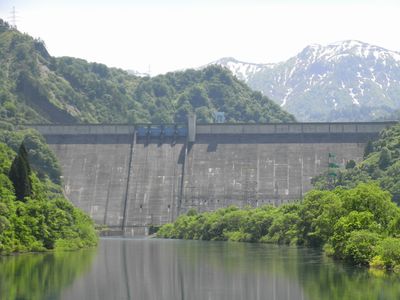
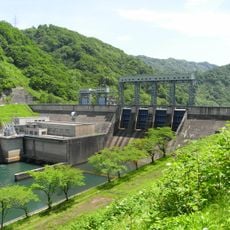
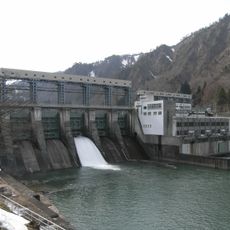
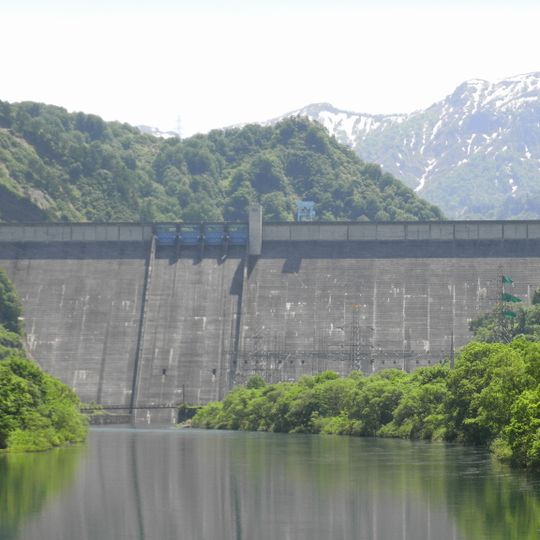
Tagokura Dam is a 145 m high gravity concrete dam on the Tadami River in Minamiaizu District, Fukushima Prefecture. Its flat-faced wall, divided by two vertical construction joints, runs 462 m between the banks; a level deck with a metal railing crosses the crest, where a small blue gate structure stands beside a taller concrete pillar. A metal catwalk hugs the lower right of the face. The dam impounds Lake Tagokura, which holds 494,000,000 cubic metres.
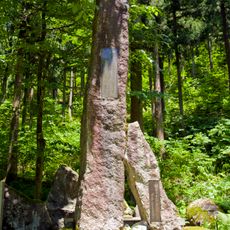
Tagokura Dam was built by the Electric Power Development Company (J-Power) on the Tadami River, with construction starting in 1953 and the dam completed in 1959. The reservoir submerged the Tagokura settlement of 50 households and 290 people, and compensation talks lasted eight years, ending in July 1956. The project cost about 34.8 billion yen and employed some 3 million worker-days; 43 workers died during construction, and a memorial service is held each year at Obon.
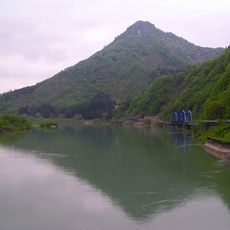
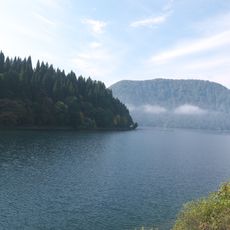
Lake Tagokura, the reservoir behind the dam, was chosen in 2005 as one of Japan's "Dam Lake 100" on the recommendation of Tadami town. The lake is known for char fishing, with fish over 60 cm sometimes caught; fishing is banned from 1 October to 31 March, and a permit fee applies during the open season. Sightseeing boats run on the lake, and visitors come for the fresh green of early summer and the autumn colours.
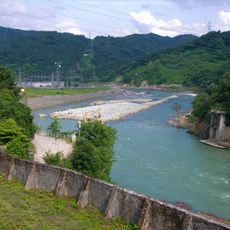
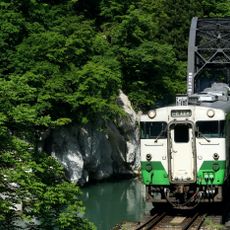
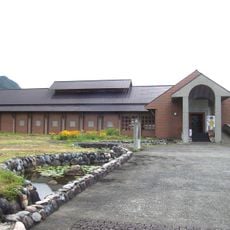
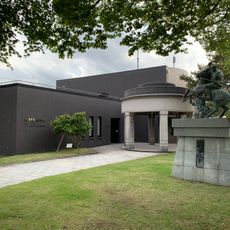
Tagokura Dam stands on the Tadami River in Minamiaizu District, Fukushima Prefecture, and is reached by road from Aizu-Kawaguchi; the Tadami Line runs through the valley. The dam crest is open to walkers and looks across to the smaller Tadami Dam just downstream. The Tagokura Power Station itself is closed to the public, but the Denpatsu Tadami Exhibition Hall by National Route 252 near Tadami Dam explains hydroelectric power and displays photographs of Tagokura under construction.
The dam is nicknamed part of the "OTM Three Great Dams" alongside Okutadami and Miboro, the initials of the three J-Power plants. Its concrete volume is Japan's second largest among gravity dams, after Miyagase Dam, and the cement used would stack about 311 times the height of Mount Fuji in bags.
The community of curious travelers
AroundUs brings together thousands of curated places, local tips, and hidden gems, enriched daily by 94,933 contributors worldwide.