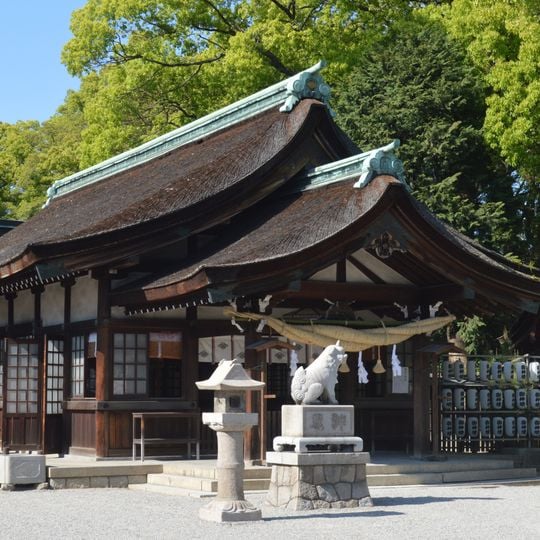
Chiryū Shrine, Shinto shrine in Aichi Prefecture, Japan
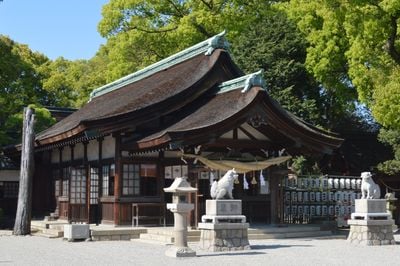
Chiryū Shrine is a Shinto shrine in Nishi-machi built in the Owari style, distinguished by its characteristic two-gabled roof structure. The wooden building showcases traditional craftsmanship, and the main shrine sits within a maintained complex that includes secondary structures and covered walkways.
According to shrine tradition, the shrine was founded when Yamato Takeru enshrined four ancestral deities after his eastern campaign; another tradition dates it to 192 AD. It appears in the Engishiki register of 927 as a Shikinaisha of Hekikai district, and its deity was raised to Senior Fourth Rank in 876. In 1547 it burned in war and was moved to its present site in 1573.
The shrine was long known as Ikitsuhime Daimyōjin, and in the Edo period it was counted among the three great shrines of the Tōkaidō. It was venerated as a protector against pit vipers and snakes, for rain-making and safe childbirth, and amulets were carried as far as the Kantō and San'in regions. The Chiryū Festival on 3 May alternates yearly between five floats with mechanical puppets and five flower carts.
The shrine is about a 10-minute walk from Chiryū Station on the Meitetsu Nagoya Main and Mikawa lines. The stone bridge over the shrine pond, built in 1732, is 6.6 m long and 2.4 m wide, made of 19 granite slabs 12 cm thick. The main hall, offering hall and connecting corridors stand in a line, so visitors pass the offering box and the stone lantern before reaching the worship area.
The shrine keeps a 14.5-metre two-storey tahōtō pagoda rebuilt in 1509, the last remnant of the Jingū-ji temple that once stood on the grounds. During the 1868 anti-Buddhist purge the statue of Aizen Myōō was removed from it, so the tower survived; the image is now at Sōji-ji nearby.
The community of curious travelers
AroundUs brings together thousands of curated places, local tips, and hidden gems, enriched daily by 94,065 contributors worldwide.