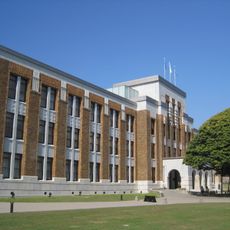
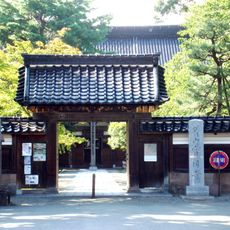
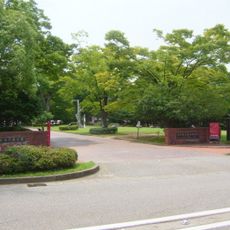
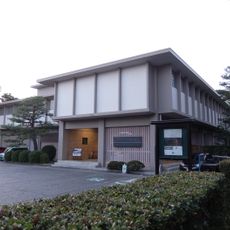
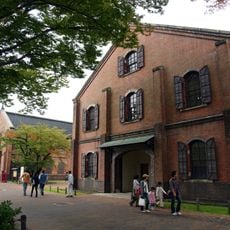
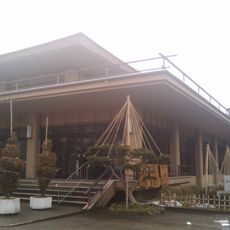
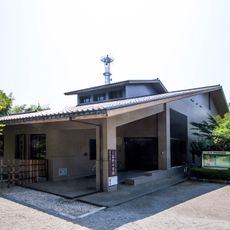
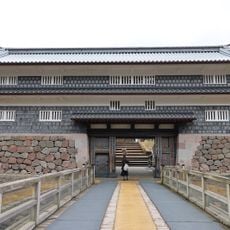
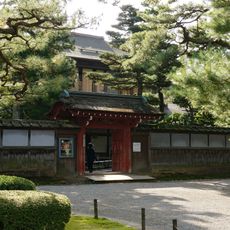
Gyokusen-en, Japanese strolling garden in Koshōmachi, Kanazawa, Japan
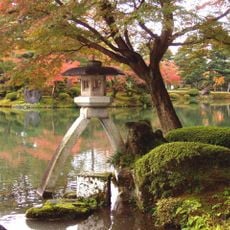
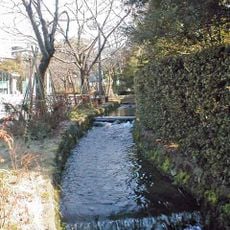
Gyokusen-en is a pond-strolling garden of about 2,370 square metres in Kanazawa, laid out on a hillside in two levels and divided into a main garden, a west garden and an east garden. Its water is fed from the curved stream near the Kotoji lantern in Kenroku-en, and the main garden's top level holds the Sai-setsu-tei tea arbour with its cloud-dragon carved蹲踞 stone basin.
The garden was begun in the early Edo period by Wakita Naokata, a senior officer of the Kaga domain, and completed over about a century by the fourth generation of his family. It takes its name from Gyokusen-in, the wife of Maeda Toshinaga. In 1905 it passed to the Nishida family, who kept it private until 1971, when a foundation was established to open it to the public.
The garden's name honours Gyokusen-in, the wife of Maeda Toshinaga and a daughter of Oda Nobunaga; the founder Wakita Naokata owed his marriage and the establishment of the Wakita family to her. The tea house Saisetsutei takes its name from a line in a poem by the Confucian scholar Kinoshita Jun'an, who named it himself. The tea room is said to be the oldest surviving in Kanazawa.
The garden features comfortable walking paths that lead around the pond and are mostly level. Visitors should wear good walking shoes, as you will spend time on foot and paths can become slippery when wet.
Gyokusen-en is one of only six gardens in Japan confirmed to follow the Gyokusen-ryū style, modelled on a landscape painting by the Chinese Southern Song monk-painter Bun Gyokusen. Its eastern waterfall, two artificial hills, stone bridge above the fall and cave-like upper section match the painting's three-tiered waterfall composition.
The community of curious travelers
AroundUs brings together thousands of curated places, local tips, and hidden gems, enriched daily by 94,022 contributors worldwide.