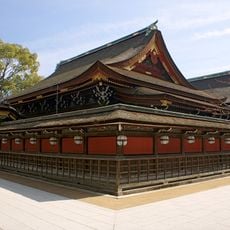
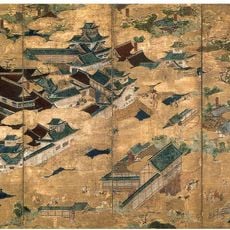
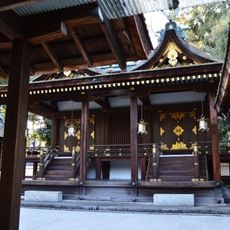
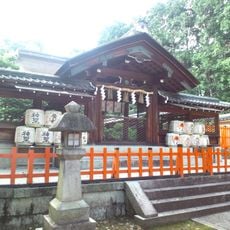
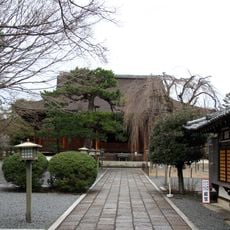
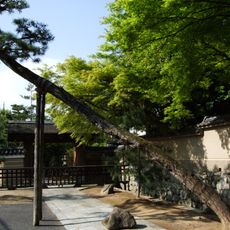
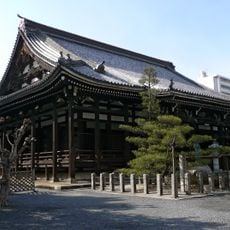
Shakuzouji, Buddhist temple in Kamigyō-ku, Japan.
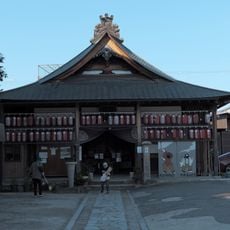
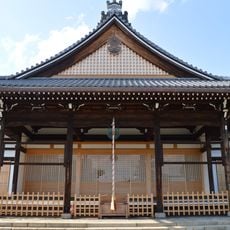
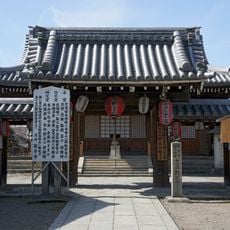
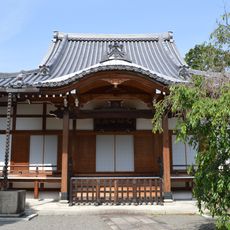
Shakuzouji, formally Karyūzan Kōmyōhenjō-in Shakuzō-ji, is a Jōdo-shū temple in Kamigyō-ku whose main image is a Jizō Bosatsu called Kuginuki Jizō. The precinct faces Senbon-dōri on its west side, with the main hall, Amida hall, Jizō hall and a monument to nail-pulling tools. The main hall's outer wall is covered with votive plaques holding real eight-inch nails and nail pullers.
Founded in 819 by Kūkai as a Shingon temple, it declined before the monk Shunjōbō Chōgen converted it to the Jōdo (Pure Land) school. Fujiwara no Ietaka entered the temple, giving the mountain name Karyūzan. It declined again until the monk Genyo revived it in 1614, and it was rebuilt after the 1730 Nishijin fire.
Known locally as Kuginuki Jizō, the temple's name comes from a legend: in 1556 a merchant named Kinokuniya Dōrin, cured of pain in his hands after a seven-day vigil, found two bloodstained eight-inch nails before the main image. Worshippers still hang votive plaques bearing real nails and nail-pullers on the main hall's outer wall.
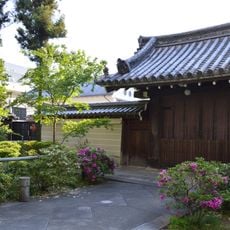
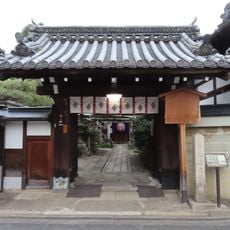
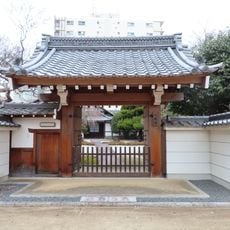
The temple stands on Senbon-dōri in the eastern part of the Nishijin district, with its gate opening onto the west side of the grounds. The main hall displays votive plaques bearing real eight-inch nails and nail pullers offered by people seeking relief from pain. Kōbō Daishi's加持水, one of the three wells attributed to him, is on the grounds.
In the Amida Hall behind the main hall stand a granite Amida triad and a Maitreya figure, completed in 1225 by the patron Saeki no Asomi Tameie, as an inscription on the central halo records. The Maitreya, added to the heritage listing in 2010, is considered Japan's oldest Buddha carved from a single stone.
The community of curious travelers
AroundUs brings together thousands of curated places, local tips, and hidden gems, enriched daily by 94,225 contributors worldwide.