Kitano Tenmangū, Shinto shrine in Kitano district, Kyoto, Japan
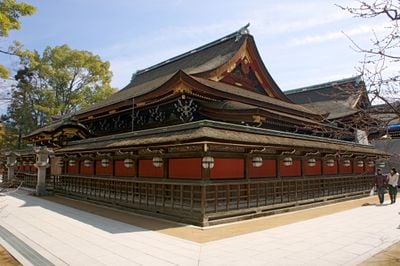
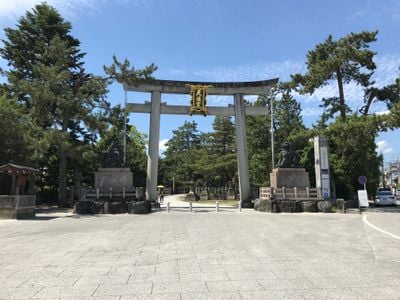
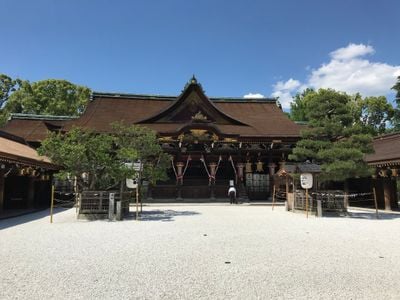
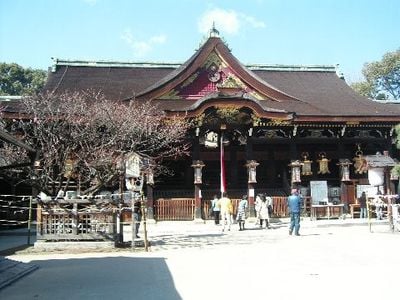
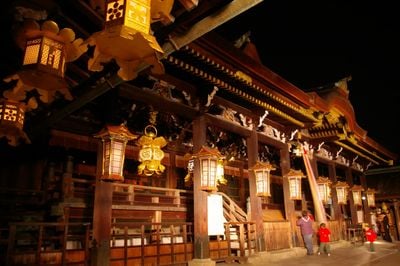
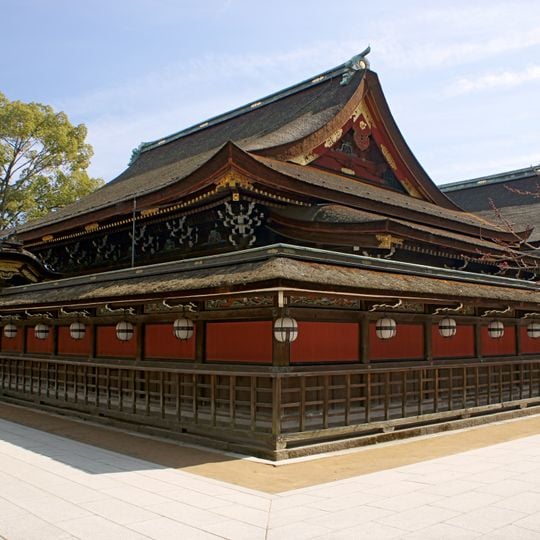
Kitano Tenmangū is a Shintō shrine in Kamigyō-ku in northwestern Kyōto, spreading across several terraces with groomed gravel paths and large open courtyards. The main hall shows richly carved woodwork and curving roofs, while a long covered gallery lines the outer perimeter of the central area.
Emperor Murakami ordered the shrine built in 947 to honor Michizane, a scholar and official who served at the imperial court and was later deified after his death. The current main hall was rebuilt in the 17th century during the Tokugawa family's rule and keeps the architectural concept of the original layout.
Michizane, a historic scholar figure, became a patron of learning after his death, and his revered status brings many schoolchildren and students here today who hang small wooden plaques with exam wishes. These plaques fill racks throughout the shrine grounds, showing the ongoing connection between the site and academic life.
The grounds are open every day from 7 in the morning until 8 in the evening, and visitors can explore the entire outer area freely while the inner section of the main hall is only accessible during special events or ceremonies. On the 25th of each month, a local market featuring antiques, crafts, and food stalls opens early in the morning and closes by mid-afternoon.
The grounds hold more than 1,500 plum trees, including around 50 different varieties, that bloom between late February and early March and create a wave of shifting color during that time. In February, the shrine hosts the Baikasai festival, when maiko and geiko in traditional dress perform outdoor tea ceremonies beneath the flowering branches.
The community of curious travelers
AroundUs brings together thousands of curated places, local tips, and hidden gems, enriched daily by 60,000 contributors worldwide.