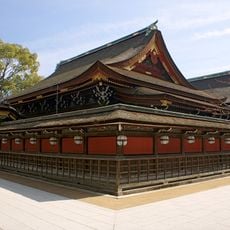
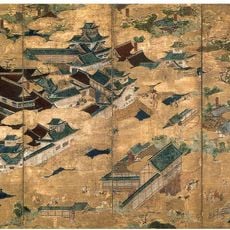
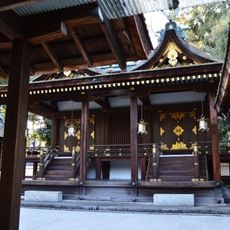
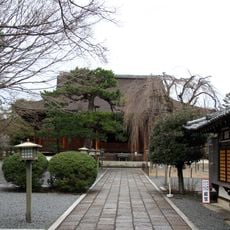
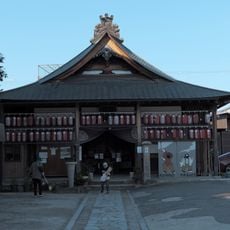
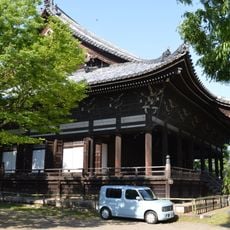
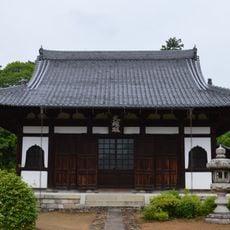
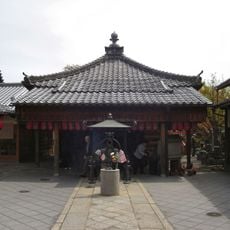
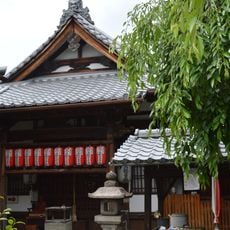
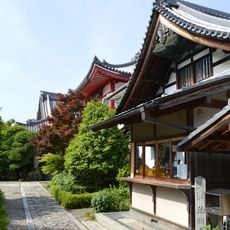
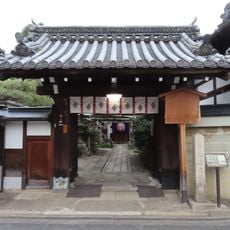
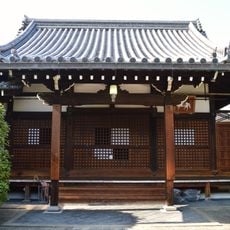
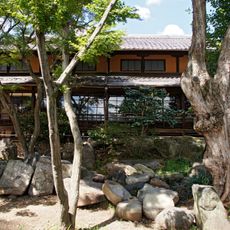
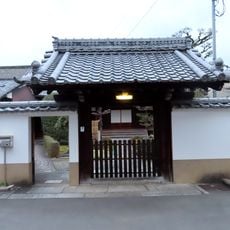
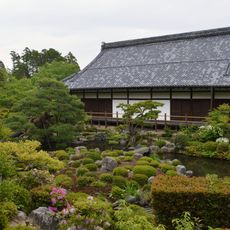
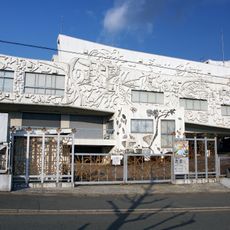
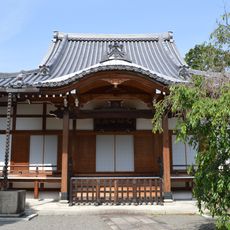
Kannon-ji, Kitano-tenmangu, Buddhist temple in Kamigyō-ku, Japan.
Kannon-ji, formally Higashimuki Kannon-ji, is a Shingon-shū Sennyū-ji school temple in Kamigyō-ku, Kyoto. Its main hall, rebuilt in 1607 by Toyotomi Hideyori with Katagiri Katsumoto as magistrate, faces east and enshrines an eleven-faced Kannon statue said to be carved by Sugawara no Michizane. The main hall and the 1694 worship hall are joined in a gongen-zukuri style and are Kyoto City Designated Tangible Cultural Properties.
Founded in 806 by imperial order as Asahi-dera, the temple became Kitano Tenmangū's jingū-ji in 947, when Sugawara no Michizane's shrine was moved here. In 961 a self-carved eleven-faced Kannon was brought from Kanzeon-ji in Chikuzen as its main image. In 1311 it was reorganized as a Risshū-in of the Sennyū-ji Shingon school and renamed Kannon-ji. Toyotomi Hideyori rebuilt the main hall in 1607 under Katagiri Katsumoto.
The temple is the 31st stop on the Rakuyō Sanjūsansho Kannon pilgrimage, a circuit of 33 sites in Kyoto. Its main image is an eleven-faced Kannon said to have been carved by Sugawara no Michizane himself, brought here in 961 from Kanzeon-ji in Chikuzen. The temple was formerly the jingū-ji of Kitano Tenmangū.
The temple stands at the end of a lane off Imakoji-dori, west of Onmae-dori in Kamigyō-ku. The nearest station is Kitano-Hakubaichō on the Keifuku Kitano Line, about a ten-minute walk away. Photography of the Byakue Kannon hall's exterior is not permitted.
The temple holds a tomb attributed to Ōtomo, Sugawara no Michizane's mother, over 4 metres tall. It originally stood where Kitano Tenmangū's Ōtomo Shrine is now and was moved here during the Meiji-era persecution of Buddhism. Near it stands a mound called Tsuchigumo-zuka.
The community of curious travelers
AroundUs brings together thousands of curated places, local tips, and hidden gems, enriched daily by 94,043 contributors worldwide.