Mount Yone, Mountain peak in Niigata Prefecture, Japan.
Mount Yone is a 992.5-metre mountain on the border between Niigata Prefecture's Chūetsu and Jōetsu regions, near Kashiwazaki and Jōetsu. Its clean four-sided pyramid-shaped summit stands out and long served as a landmark for travellers by land and sea. The mountain body is volcanic rock, the remnant of an ancient submarine volcano, though the mountain itself was not formed by an eruption.
Mount Yone (992.5 m) was long taken for a dormant volcano because of its volcanic rock and cone-like profile; in the early Showa era the rock was shown to be the remnant of an old submarine volcano, and the mountain itself is not volcanic. In the Edo period the Hokuriku road was rebuilt and the Hatchisaki barrier was set at Yoneyama Pass to control travellers heading for Izumozaki and Sado Island. A period also existed when Niigata Prefecture was divided at Mount Yone, with the east side called Shimo-Echigo and the west side Kami-Echigo.
The mountain's near-pyramidal profile earned it the name Echigo-Fuji, and it served as a landmark for travellers on both land and sea routes. In the Edo period the Hokuriku road was rebuilt and Hachisaki Barrier was set up at Yoneyama Pass to check travellers heading for Izumozaki and Sado Island.
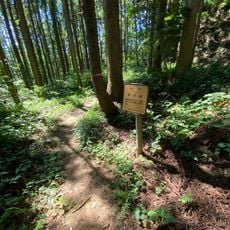
Walking trails lead to the summit from both nearby Kashiwazaki and Joetsu, with different routes suited to various skill levels. Choose your path based on your experience and bring weather-appropriate gear for the climb.
The summit's clean four-sided pyramid shape made Mount Yone a landmark for travellers on both land and sea routes, and it was long known as Echigo Fuji. Its volcanic-looking rock is actually the remnant of an ancient submarine volcano, not an eruption cone.
The community of curious travelers
AroundUs brings together thousands of curated places, local tips, and hidden gems, enriched daily by 94,065 contributors worldwide.