Mount Tatsuda, Summit in Kumamoto, Japan
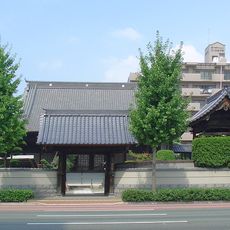
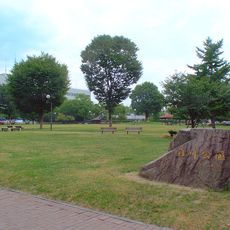
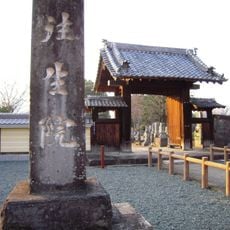
Mount Tatsuda is a 151.7 m hill in central Kumamoto, formed as an isolated volcano at the same time as the outer rim of the Kinpō range. It rises northeast of the city centre, and its slopes hold the Tatsuda Natural Park on the site of Taisō-ji, the former family temple of the Hosokawa lords, where the graves of Hosokawa Fujitaka and his wife, Hosokawa Tadaoki and Hosokawa Gracia, stand.
Mount Tatsuda was long called Kurokami-yama, after Kuraokami, a dragon deity farmers around the Shirakawa prayed to for rain during droughts. The name Tatsuda is said to come from the Heian poet Kiyohara no Motosuke, who saw in the hill a likeness of Nara's Tatsuta. In 1955 the city opened the Tatsuda-yama green spaces, and the former Higo Hosokawa family temple Taishō-ji, with the graves of Fujitaka, Tadaoki and Gracia, is a national historic site.
The mountain's name comes from Kurokami-yama, linked to the rain god Kuraokami-no-Kami, whom farmers around the Shirakawa river once prayed to here for rain during droughts. The reading shifted over time to Kurokami, written with characters unrelated to hair. Place names such as Tatsuda and Ryuda remain nearby, and a Ryujin Bridge still crosses the Shirakawa below the Kurokami campus of Kumamoto University.
Mount Tatsuda is reached from JR Tateda-guchi Station on the Hohi Line, the closest stop to the Tatsuda-yama Ikoi no Mori wooded area, or by bus from Sakura-machi BT and Kumamoto Station; get off at Tateda-guchi Station-mae or Ryugahira. The summit and the Tatsuda-yama water reservoir are served by the bus stop in front of Tatsuda-yama and Asahino General Hospital on the west-side Denki Bus line. Trails run through planted forest and past the Tatsuda-yama experimental forest of the Forestry and Forest Products Research Institute.
The name Tatsuda-yama preserves the old cult of the rain dragon Kuraokami: farmers around the Shirakawa river prayed on this hill during droughts, and the pronunciation shifted from Kuraokami-yama to Kurokami-yama. The kanji for "black hair" is only a later phonetic substitute, unrelated to hair. A bridge named Ryūjin-bashi still crosses the Shirakawa south of Kumamoto University's Kurokami campus.
The community of curious travelers
AroundUs brings together thousands of curated places, local tips, and hidden gems, enriched daily by 93,531 contributors worldwide.