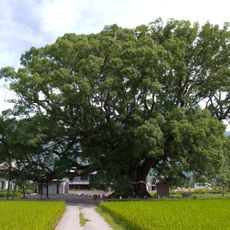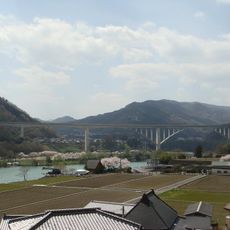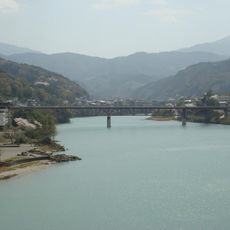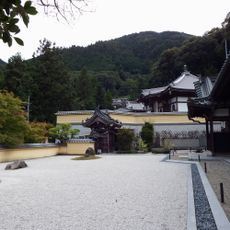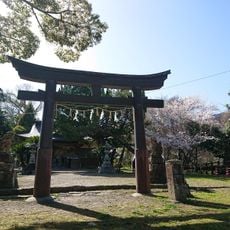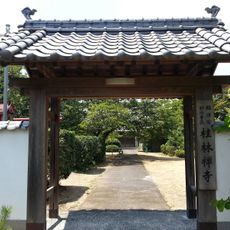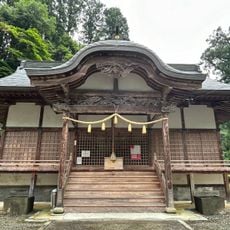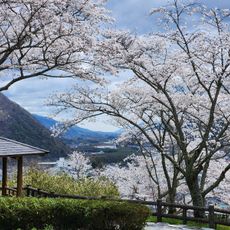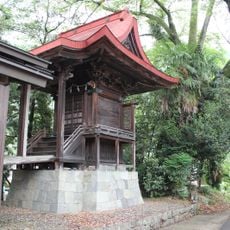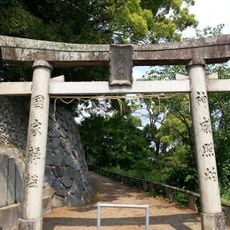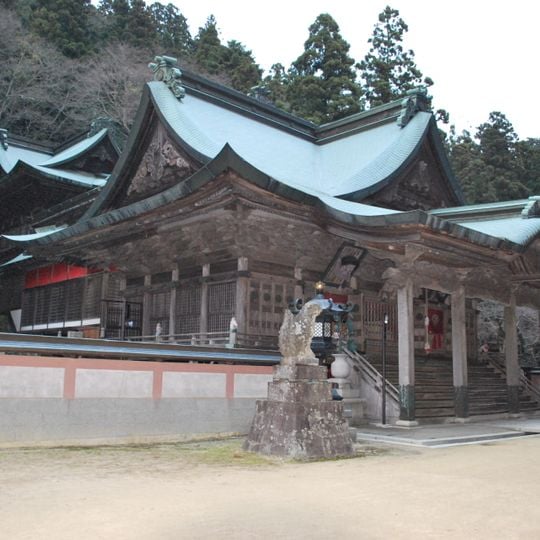
Hashikura-ji, Buddhist temple in Ikedachō Shūzu, Japan.
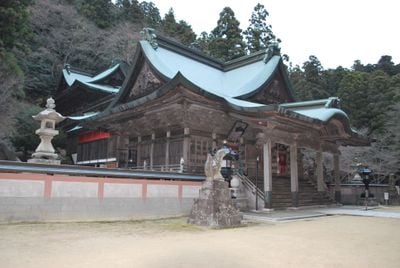
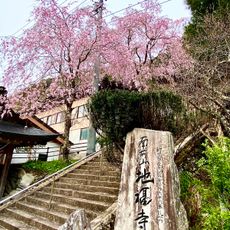
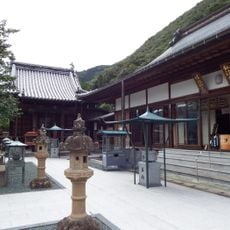
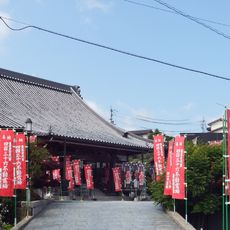
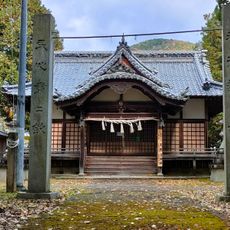
Hashikura-ji stands on the southern slope of Mount Hōju (633 m), a peak on a ridge running southeast from Mount Hashikura. Its main hall, a complex of three connected sections built on a slope, and the Goma Hall are among six buildings designated Important Cultural Properties in 2004. A stone lantern and a white wall with pinkish-red panels stand near the entrance.
According to tradition, Kūkai climbed the mountain in 828, received an oracle from Konpira Daigongen, carved the deity's image and built a hall. A fire in 1677 destroyed many records, and the chronicle was recompiled in 1769 by Reizui of Mount Kōya. Another fire in 1826 burned most of the complex; the present buildings date mainly from the late Edo period, around 1856–1861.
This temple serves as the fifteenth station on the Shikoku Bekkaku Nijū Reijō pilgrimage route, drawing visitors who undertake this sacred journey. The daily fire rituals shape the rhythm of the place and connect it to a spiritual tradition spanning more than a thousand years.
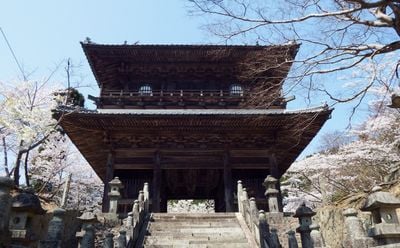
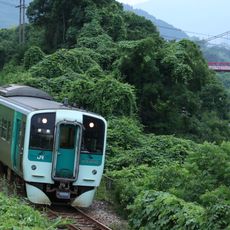
The ropeway runs from the base station near Hashikura Station to a summit station beside the hōjō, covering a height difference of 342 m in four minutes. On foot, the route from the Niō Gate to the hōjō takes about 30 minutes, and the climb from the hōjō to the main hall is 278 steps. The path from the temple gate to the main hall totals 769 steps.
The temple keeps a pair of stone lanterns in front of the Goma Hall donated by Ichikawa Ebizō VII, the late-Edo actor who performed under the name Ichikawa Danjūrō VII; the names of his seven sons, including the future Danjūrō VIII, are carved on them. Near the summit, a spring called Isshō-mizu is said to have been opened by Kūkai's staff and yields about one shō of water year-round, never drying even in drought.
The community of curious travelers
AroundUs brings together thousands of curated places, local tips, and hidden gems, enriched daily by 93,521 contributors worldwide.