Shōnen-ji, Buddhist temple in Imaichō, Japan
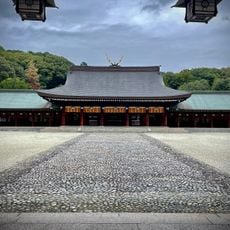
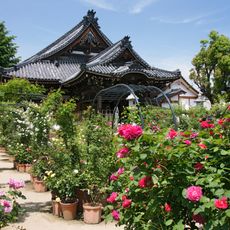
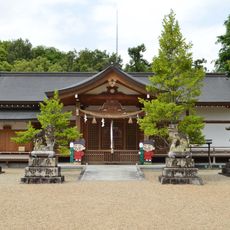
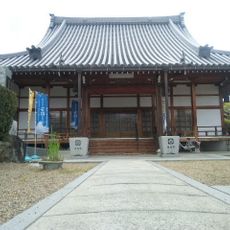
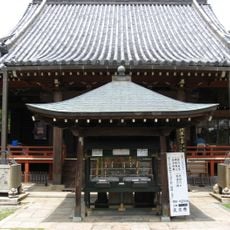
Shōnen-ji is a Jōdo Shinshū temple in Imaichō whose main hall (hondō), facing east, is an irimoya-zukuri building with a hongawara-tiled roof and a projecting entrance porch, measuring 20 m by 21 m. South of it stand the kuri, kyakuden and taimenjo, and the mountain gate was moved here from Tanzan Shrine. The kuri entrance's onigawara tile bears the Tokugawa clan's three-leaf hollyhock crest.
Kawase Gonpachirō Hyōbu-no-jō Munetsuna obtained the temple name from Kenshin of Ishiyama Hongan-ji and built a nenbutsu dōjō in Imaigo. During the Eiroku era (1558–1570), with Kawai Chōzaemon Masafuyu, he dug moats and earthen ramparts to form a jinaichō, and the dōjō became Shōnen-ji around 1600. In 1679 the shogunate ranked it with village temples, ending the family's samurai status.
The temple is also called Imai Gobō, and its grounds gave the surrounding district its name: Imaichō grew as a jinaichō, a temple town laid out with moats and earthen ramparts by Kawai Chōzaemon Masafuyu and the Kawase family in the Eiroku era (1558–1570). The main hall faces east, and the demon tile on the kuri entrance bears the Tokugawa triple hollyhock crest.
Shōnen-ji stands in the Imaichō district of Kashihara, a short walk from the machiya-lined streets of the Imaichō preservation area. The main hall has been undergoing its first full dismantling and repair since April 2010, so parts of the precinct may be closed off; check locally before setting out. The gate was moved here from Tanzan Shrine for Emperor Meiji's 1877 visit.
The main hall was the first Jōdo Shinshū temple hall outside the head temple Hongan-ji to be designated a National Important Cultural Property, on 23 May 2002. It measures 20 m by 21 m, faces east, and was dismantled for repair from April 2010.
The community of curious travelers
AroundUs brings together thousands of curated places, local tips, and hidden gems, enriched daily by 93,431 contributors worldwide.