Miminashi Yamaguchi Shrine, Shinto shrine in Japan
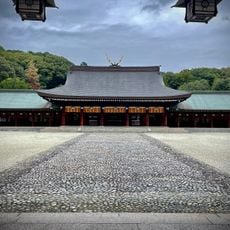
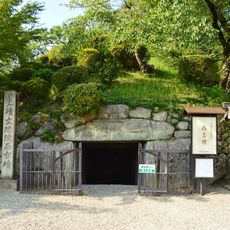
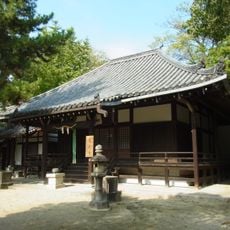
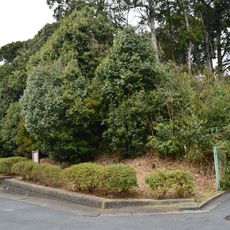
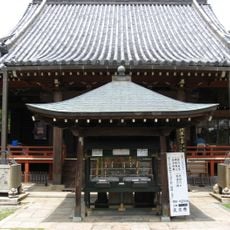
Miminashi Yamaguchi Shrine is a small Shinto shrine in Kashihara built in Kasuga-zukuri style, featuring simple lines and a thatched roof. The main building has a modest, clean appearance and is marked by a simple wooden torii gate at the entrance.
The shrine's founding date is unknown, but a 730 record in the Shōsōin documents notes that it received rice from the emperor, and the Engishiki lists it as a major shrine receiving monthly and harvest festivals. In 806 and again in September 859, imperial envoys performed rain-prayer rites here. A 1651 dispute over felling of sacred trees led to a 1702 settlement confirming the shrine's status; the present main hall and worship hall were rebuilt in August 1748 by parishioners of Miminashi village.
The shrine honours Takamimusubi-no-kami and Oyamatsumi-no-kami, and the torii at the start of the approach still reads "Miminashi-yama" (earless mountain), a trace of the old name. A wasan arithmetic tablet with problems and solutions was dedicated here in 1854 and can be seen among the shrine's votive items.
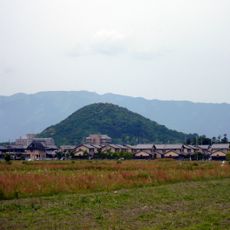
The shrine stands about eight-tenths of the way up Mount Miminashi, not at its foot, so reaching it means climbing the mountain path; the torii at the trail entrance bears the old name "Miminashi-yama" (earless mountain). The summit of this 139-metre hill of the Yamato Sanzan lies a short climb above the precinct.
The torii at the foot of the approach path reads "Miminashi-yama" (earless mountain), a name left over from the Edo-period dispute over the mountain, settled in 1702. A votive tablet (sangaku) of 1854 hangs at the shrine, recording a wasan mathematics problem and its solution.
The community of curious travelers
AroundUs brings together thousands of curated places, local tips, and hidden gems, enriched daily by 94,610 contributors worldwide.