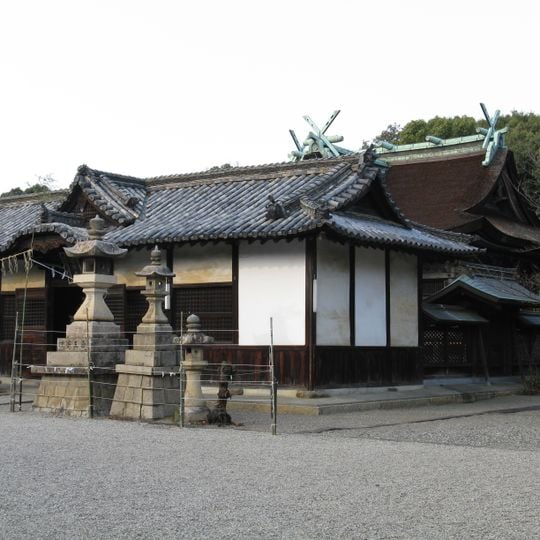
Hijiri Shrine, Shinto shrine in Izumi, Japan
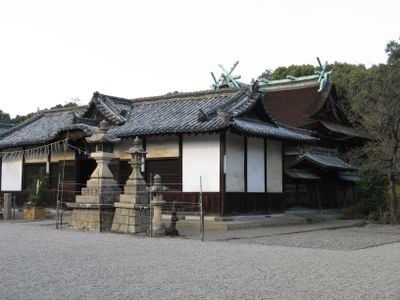
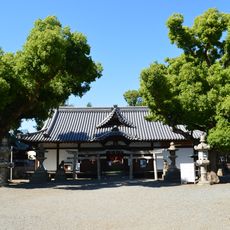
Hijiri Shrine is a Shinto shrine set on the Shinodayama Kyuryo hills in Izumi, Japan, surrounded by the old Shinoda-no-Mori forest. The complex holds several buildings, including subsidiary shrines such as Massha Taki and Massha San, with the main hall recognized as an Important Cultural Property of Japan.
The shrine was extensively rebuilt under Toyotomi Hideyori, who brought several subsidiary structures into the complex during the early 17th century. The buildings from that period were later recognized by the Japanese government as national cultural properties.
The shrine is also called Shinoda Myojin, Shinoda-sha and Shinda Hijiri-sha, and the nearby Shinoda Oji recalls its link to the Kumano road. The Nakaizumi Kaido leading from Sukematsu in Izumiotsu is known as the Nunobiki no Michi: the deity, landing at Sukematsu beach, is said to have spread cloth on the way to the shrine. A stone marker for the road stands at its crossing with the Kishu Kaido.
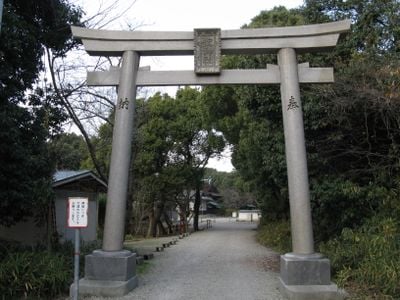
The shrine is a short walk from JR Hanwa Line Kita-Shinoda Station. The stone torii and its guardian lions stand along the Kumano Kaido road, so the approach follows that old route. The main hall and the subsidiary shrines of San, Taki and Hiraoka, rebuilt in 1604, stand within the precinct; the San and Taki shrines were moved to their present positions in 1873. Walking toward the Kagami-ike pond leads to Nezumi-zaka slope.
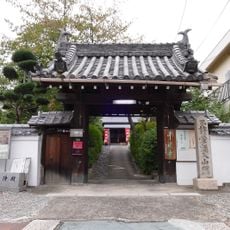
The shrine's portable mikoshi carries an ink inscription dated 28 February 1483 (Bunmei 15) and is listed as an Important Artwork of Japan. The shrine also keeps a statue of Hijiri Fudo Myoo, a remnant of the era when Shinto and Buddhism were combined here before the Meiji separation of 1868.
The community of curious travelers
AroundUs brings together thousands of curated places, local tips, and hidden gems, enriched daily by 94,148 contributors worldwide.