興国寺, Buddhist temple in Yura, Japan
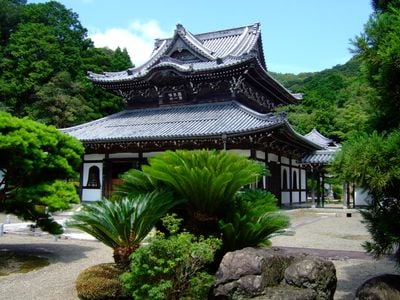
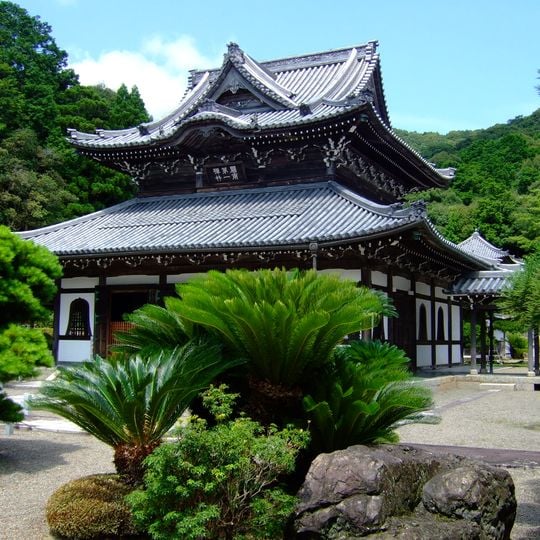
Kōkoku-ji is a Rinzai-shū Myōshin-ji school temple whose mountain name is Shūhōzan and whose main image is Shakyamuni. Its two-tiered hall shows white plaster walls with dark wooden posts below and, above, a smaller storey with carved brackets and a plaque reading "奥國寺". The grounds also hold a main hall rebuilt in 1797, a bell tower, a shakuhachi hall and a zendō.
The temple was founded in 1227 by the monk Ganshō of Kongōsanmai-in on Mount Kōya, originally as a Shingon temple called Saihō-ji, to pray for Minamoto no Sanetomo. In 1258 he invited the Zen master Shinchi Kakushin, back from Song China, as founding abbot. The temple later received the name Kōkoku-ji from Emperor Go-Daigo. Most buildings burned in Toyotomi Hideyoshi's 1585 conquest of Kishū and were rebuilt in 1601 by Asano Yoshinaga.
Locals call the temple Yura Kaisan, "the founding of Yura". Its name comes from the temple title Kōkoku-ji granted by Emperor Go-Daigo. The monk Kyochiku, a disciple of the founder Kakushin, is regarded as the originator of the shakuhachi flute, and the temple keeps a shakuhachi training hall. The lantern-burning rite, Tōrō-yaki, is a prefectural intangible folk cultural property.
Kōkoku-ji stands in Yura, Wakayama Prefecture, about a 30-minute walk from Kii-Yura Station on the JR Kisei Line. The temple is the eighth stop on the Kii no Kuni Thirteen Buddhas pilgrimage circuit. A large rock sits at the temple gate, designated a national natural monument.
The temple claims to be the birthplace of Japanese soy sauce production, with techniques introduced by its founder who studied in China. This culinary development emerged from monastic activities and later became central to Japanese cooking traditions.
The community of curious travelers
AroundUs brings together thousands of curated places, local tips, and hidden gems, enriched daily by 93,444 contributors worldwide.