興聖寺, Buddhist temple in Takashima, Japan.
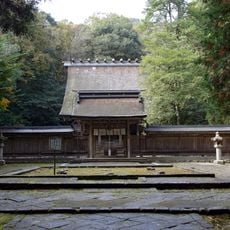
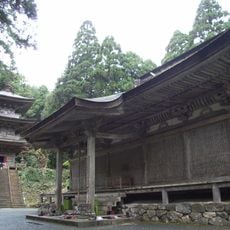
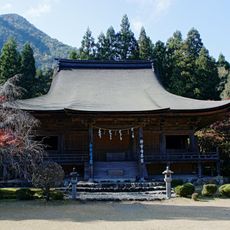
Kōshō-ji is a Buddhist temple with traditional wooden buildings and landscaped gardens situated on a hillside overlooking the Adogawa River. The grounds contain multiple structures and spaces arranged to guide visitors through different areas of the temple complex.
Dōgen, returning from the capital toward Echizen, urged Sasaki Nobutsuna to build a temple; it was founded in 1243 at Shigetsudani in Kamikashiwamura. The site had earlier held Iwagami-kan, where Hosokawa Takakuni laid out a garden for shogun Ashikaga Yoshiharu in 1528. In 1729 the temple moved to the former Shūrin-ji grounds, and its main hall burned in 1828, being rebuilt in 1857.
The honzon is a seated Shakyamuni Buddha in joined-block cypress (yosegi-zukuri), attributed to the Heian-period monk Saichō. The temple is stop 14 on the Kansai Flower Temple pilgrimage, a 25-site circuit. The garden's stones were donated by the Sasaki, Kyōgoku and Azai clans at Hosokawa Takakuni's request.
The temple stands at Kutsuki-Iwase 374 in Takashima. From JR Adogawa Station on the Kosei Line, a Kōyō bus reaches the Iwase or Kutsuki-Gakkō-mae stop in about 30 minutes; from Katada Station the ride takes about 1 hour 20 minutes. By car it is roughly 1 hour 15 minutes from Kyoto via Route 367, or about 50 minutes from Obama via Routes 303 and 367.
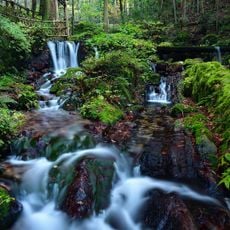
The garden now called Kyū-Shūrinji Teien is also known as the Ashikaga Garden, and some argue it should be named Iwagami-kan Garden after the shogun's residence that once stood here. Its pond garden uses the Adogawa River and the Hira mountains as borrowed scenery, with a waterfall called the Drum Falls feeding the pond.
The community of curious travelers
AroundUs brings together thousands of curated places, local tips, and hidden gems, enriched daily by 94,460 contributors worldwide.