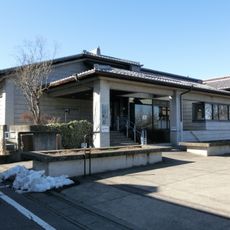
Gunma Museum of Natural History, Natural history museum in Tomioka, Japan
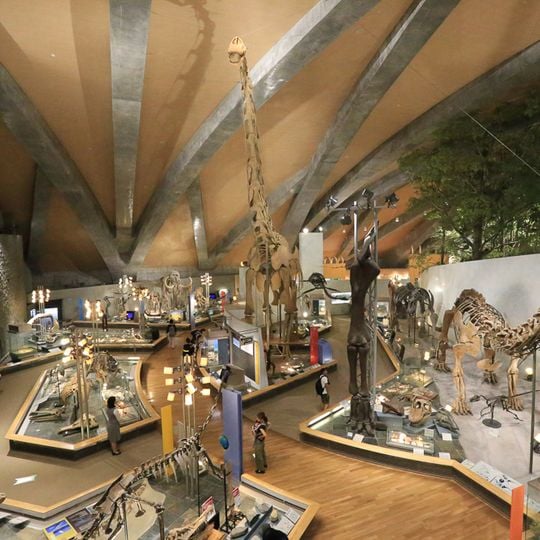
The Gunma Museum of Natural History in Tomioka holds a mounted Camarasaurus skeleton and a life-size moving Tyrannosaurus model, both rare in Japan, along with a large beech forest diorama. Its galleries cover the Earth's eras, Gunma's nature and environment, Darwin's room, humans in nature, and the irreplaceable Earth. Local finds on show include dinosaurs from Kanna, the ancient fish Helicoprion, the mammal Paleoparadoxia and the Yabe's giant deer.
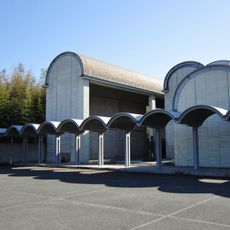
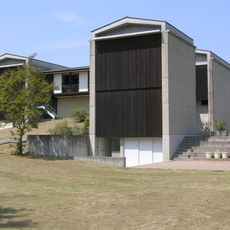
The museum traces its origin to 1978, when the former Gunma Prefectural Museum was repaired and reopened as the Gunma Prefectural Natural Science Museum. That institution was abolished on 31 March 1996, its collections passed to the new natural history museum, which was founded on 1 April 1996 and opened on 22 October in a building designed by Uchii Shōzō. Palaeontologist Yoshikazu Hasegawa became its first director.
The museum's name in Japanese is Gunma Kenritsu Shizenshi Hakubutsukan, and its bulletin has been published annually since 1996. The adjoining Kabura Culture Hall hosts events, and the collection includes fossils found in the prefecture, such as the Kanna dinosaur, the ancient fish Helicoprion, the mammal Paleoparadoxia and the Yabe's giant deer.
The museum sits in an easily accessible location in Tomioka where visitors can spend time exploring the various exhibitions at their own pace. It works best when you set aside a few hours to see the collections thoroughly, especially if visiting with children.
The museum features a mechanical Tyrannosaurus rex model that ranks among Japan's largest and moves in ways that capture visitors' attention. A robot naturalist explains the evolution of living creatures alongside it, turning learning into an interactive experience.
The community of curious travelers
AroundUs brings together thousands of curated places, local tips, and hidden gems, enriched daily by 93,444 contributors worldwide.