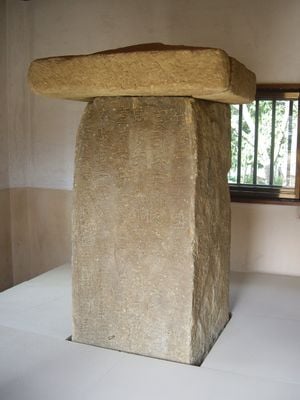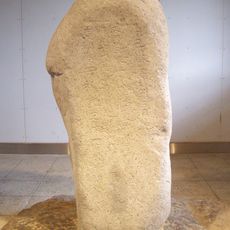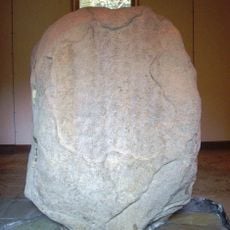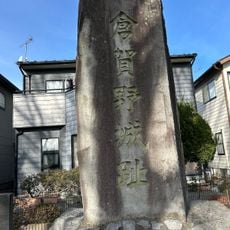
Tago Stele, Ancient stone stele in Takasaki, Japan
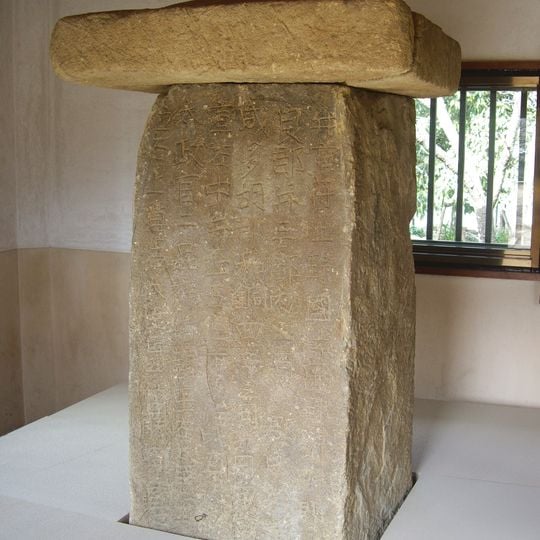
The Tago Stele is an upright stone made of arkose in Takasaki, measuring 1.3 meters in height. The engraved characters are arranged in six rows and total 80 written symbols.
The inscription was created in 711 during the Nara period and records the founding of Tago County through the division of 300 households from three neighboring districts. The monument is among the oldest surviving administrative documents from that era in Japan.
The name Tago refers to the historic county documented in the inscription, and the regular script follows Chinese models from the Tang Dynasty. Visitors can see from the well-preserved calligraphy how administrative texts were written during the Nara court period.
The stone is housed in a museum in Yoshii-machi, where replicas and archaeological finds from the region are displayed. Visitors can walk through the exhibition to study the characters up close.
The monument received UNESCO Memory of the World recognition in 2017 as part of the Kozuke Three Stelae collection. This group shows early examples of written administrative orders in ancient Japan.
The community of curious travelers
AroundUs brings together thousands of curated places, local tips, and hidden gems, enriched daily by 92,543 contributors worldwide.