舟橋, Historic wooden bridge in Toyama, Japan
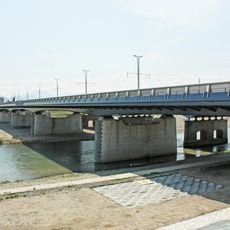
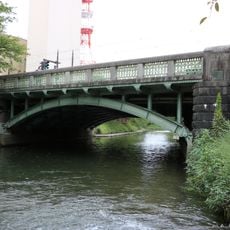
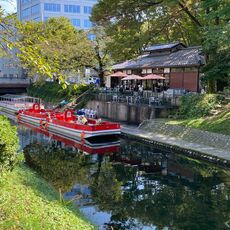
The Funabashi Bridge spans the Matsukawa River in Toyama City with a traditional wooden structure featuring iron chains and decorative ship-shaped railings. This crossing connects the riverbanks and provides access to tea houses and dining establishments nestled in the surrounding neighborhood.
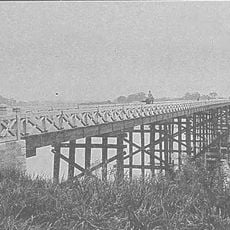
During the Edo period, this structure served as one of Japan's largest floating bridges on the Jinzu River, built from wooden pillars and connected boats. It was later reconstructed and transformed into its present form while preserving the original concept of boat-based construction.
The bridge was a celebrated subject of haiku, waka and Chinese-style poetry; the writer Jippensha Ikku praised it in Kin no waraji. It also appears in many ukiyo-e prints, among them Hiroshige's 1853 sheet from the Sixty-odd Provinces series, and in travel accounts such as Toyuki.
The current bridge, completed in September 1989, carries the Toyama Prefectural Route 208 Kotake-Suwakawara line over the Matsukawa. Its deck has a wood-grain finish, and ship-shaped balconies sit on both sides at mid-span. Stonework from the old wooden bridge abutments, found during construction, was reused in the revetment, and glass lanterns light the crossing.
Glass lanterns and commemorative chains serve as design elements that reference its original floating bridge construction from centuries past. These features make it a visual reminder of the innovative engineering techniques used in its creation.
The community of curious travelers
AroundUs brings together thousands of curated places, local tips, and hidden gems, enriched daily by 93,440 contributors worldwide.