Araki Shrine, Shinto shrine in Takayama, Japan.
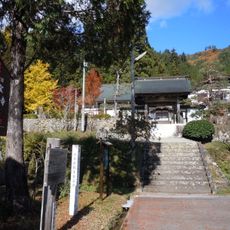
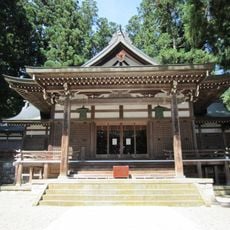
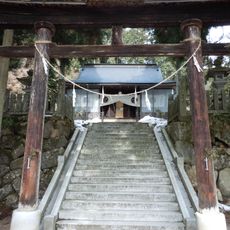
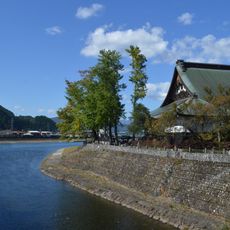
Araki Shrine in Takayama has a main hall (honden) built in 1390, a three-bay nagare-zukuri structure covered with cypress-bark shingles. It is a designated Important Cultural Property, and seven ridge tags (munafuda) were added to the designation in 1963. The shrine grounds also contain the Araki Shrine site, where four Jomon-period pit dwellings were excavated.
Araki Shrine is listed in the Engishiki shrine register as one of eight Hida Province shrines, though its founding date is unknown; the Nihon Sandai Jitsuroku records a rank of Junior Fifth Rank, Lower Grade granted to the Araki deity on the fifth day of the tenth month of 867. From the Muromachi period it was called Kahaku Daimyojin, and only in the Bunka era of the Edo period did research confirm it was Araki Shrine. The present main hall was built in 1390.
The shrine was long called Kahaku Daimyojin, a name linked to water, until research in the Bunka era (1804–1818) identified it as Araki Shrine. Its autumn festival on 7 September features the Araki Shrine Kaneuchi and Lion Dance, a Prefectural Important Intangible Cultural Property; since 2016 the festival has been held on the first Sunday of September.
Araki Shrine lies about 5 km from Hida-Kokufu Station on the JR Takayama Main Line, roughly 15 km and 25 minutes by car from the Takayama interchange of the Chubu Jukan Expressway. The precinct is surrounded by a cedar grove designated a green-space conservation area in 1977.
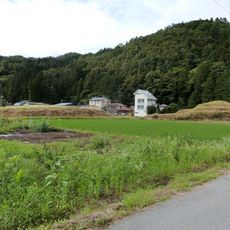
Excavations in the shrine grounds uncovered four Jomon-period pit dwellings along with pottery and stone tools such as stone axes and arrowheads. The site is designated a prefectural historic site, placing human occupation here thousands of years before the shrine's founding.
The community of curious travelers
AroundUs brings together thousands of curated places, local tips, and hidden gems, enriched daily by 94,063 contributors worldwide.