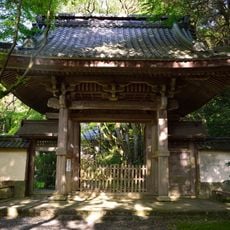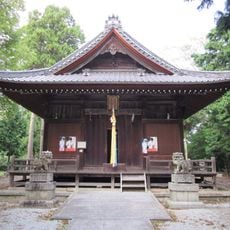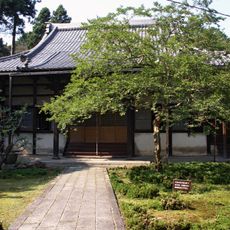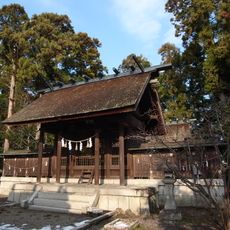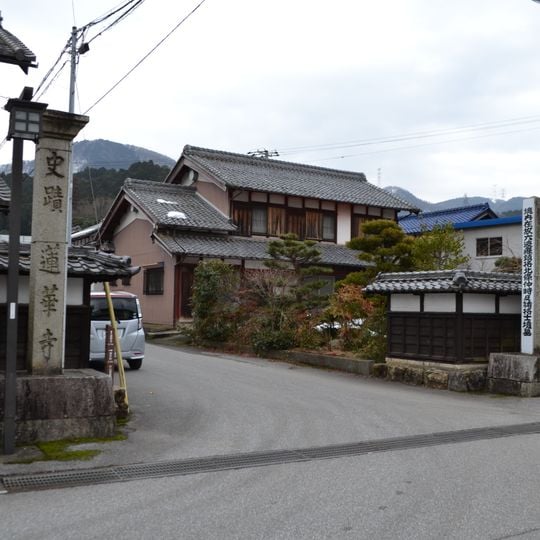
Renge-ji Temple, Buddhist temple in Bamba, Maibara, Japan
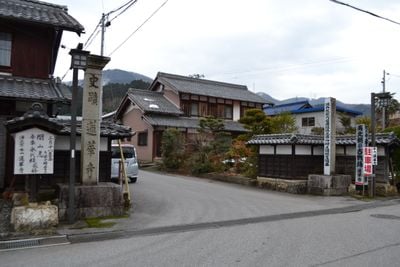
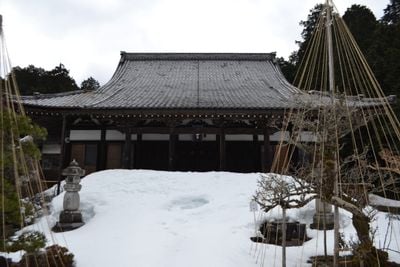
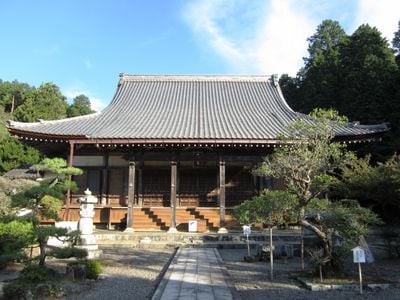
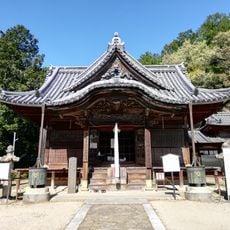
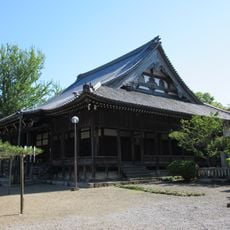
Renge-ji is a Jodo-shu temple in Maibara, Shiga Prefecture, founded in 615 by Prince Shotoku and rebuilt in 1284 by the local lord Dohi Motoyori. Its main hall is a wide single-storey timber building with a grey-tiled hipped roof and a blue plaque with gold lettering above the central doors. A stone pillar at the entrance is carved with the characters for historic site and Renge-ji.
Tradition holds that Prince Shotoku founded the temple in 615, then called Horyu-ji. In 1276 lightning burned it down; in 1284 the local lord Dohi Motoyori invited the dancing-nenbutsu monk Ikko Shunsho to revive it as Hachiyozan Renge-ji. In 1333 Hojo Nakatoki and 432 followers took their own lives before the main hall, and the priest Doa recorded their posthumous names in the Rikuha Nanboku Kakocho.
The temple's name comes from Renge-ji in Kamakura, founded by the priest Ryochu; the mountain name Hachiyo-san refers to the eight-petalled lotus. The drum dance practised by founder Ikkō Shunshō links the temple to the dancing nembutsu tradition. Since 2015 the temple has awarded the Yuyaku Prize, a dance award open to dancers, intended to reconnect the sacred and dance. A cedar planted where Ikkō Shunshō was cremated in 1287 still stands.
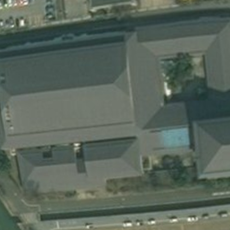
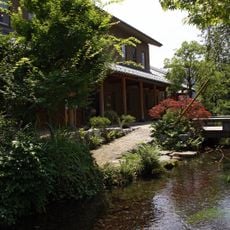
The temple is at 511 Bamba, Maihara, a short walk from the Bamba or Renge-ji-shita bus stop, about ten minutes by bus from Maihara Station. The precinct includes the main hall, the Penglai Garden, the study, and the bell tower, with paths connecting them. The grounds are flat and easy to walk.
The temple keeps the Rikuha Nanboku Kakochō, a death register in which the abbot Dōa recorded a posthumous name for each of the 432 men who killed themselves before the main hall in 1333. The stone five-ring stupas now standing as their grave were only laid out in modern times.
The community of curious travelers
AroundUs brings together thousands of curated places, local tips, and hidden gems, enriched daily by 94,774 contributors worldwide.