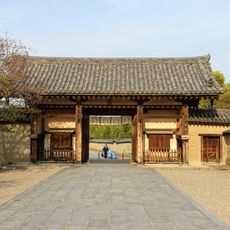
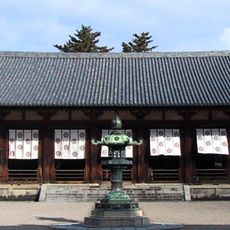
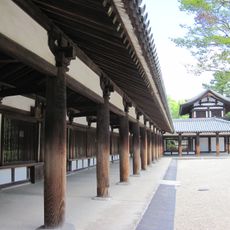
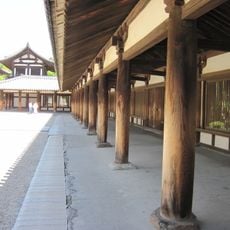
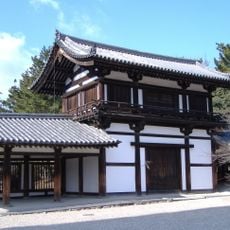
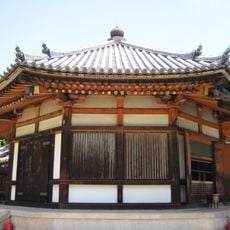
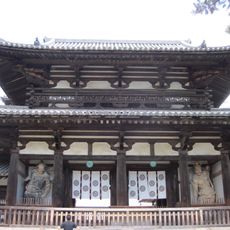
Daruma-ji, Buddhist temple in Ōji, Nara Prefecture, Japan
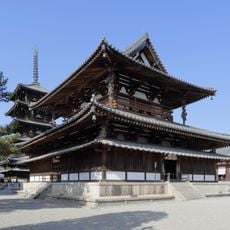
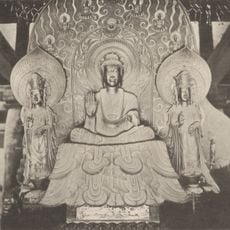
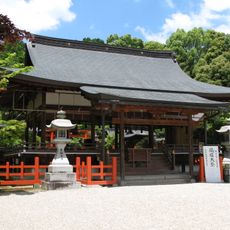
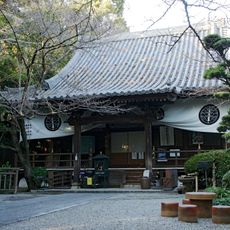
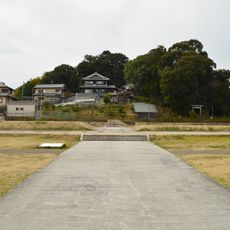
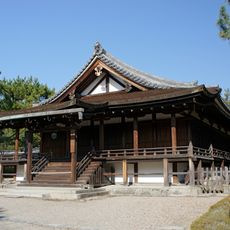
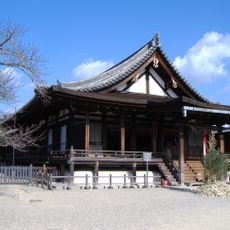
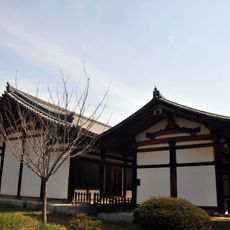
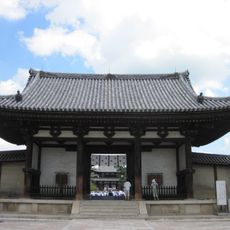
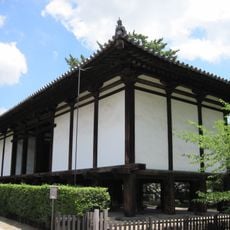
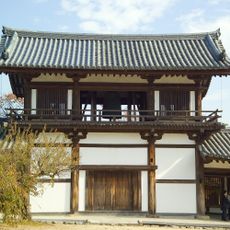
Daruma-ji is a Rinzai-shū temple of the Nanzen-ji school in Ōji, Nara Prefecture, with the mountain name Kataoka-san. Its main hall, rebuilt in 2004, stands on the site of a sixth-century kofun and houses a wooden seated Daruma statue carved in 1430 under Ashikaga Yoshinori, a designated Important Cultural Property. The temple grounds also contain the 1667 hōjō, a prefectural cultural property, and a stone column from 1448 recording the temple's revival.
The temple was founded in the early 13th century at the site of a kofun linked to the Nihon Shoki story of Prince Shōtoku and a starving man later identified as Daruma. It was razed in the early 14th century by opponents of Zen, rebuilt in 1430 under Ashikaga Yoshinori, and burned by Matsunaga Hisahide in the 16th century before Emperor Ōgimachi ordered its restoration.
The temple keeps a wooden seated Daruma made in 1430 and painted by the ink painter Shūbun, plus a 1277 wooden seated Prince Shōtoku; both are Important Cultural Properties. A stone column of 1448 records the temple's Muromachi-era revival. The city's mascot, chosen in 2013, is based on Shōtoku's dog Yukimaru.
The temple is located in Ōji and welcomes visitors to its grounds and main buildings where the artworks are displayed. Check opening times before visiting, especially if you plan to see the full collection of sculptures and paintings.
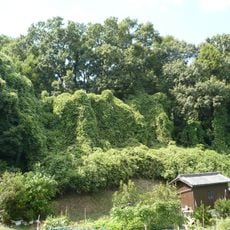
Yukimaru, Prince Shōtoku's dog, was said to understand human speech and read Buddhist texts. A stone statue of the dog from the late Edo period is a town-designated cultural property, and a kofun in the grounds, the Daruma-ji No. 1 tumulus, is known as Yukimaru's tomb. The dog became Ōji's mascot in 2013.
The community of curious travelers
AroundUs brings together thousands of curated places, local tips, and hidden gems, enriched daily by 94,405 contributors worldwide.