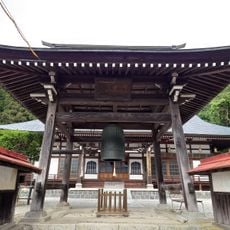
Onshō-ji, Buddhist temple in Ina, Japan.
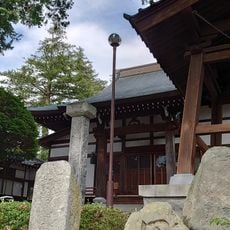
Onshō-ji is a Nichiren-sect temple on a hillside in Takatō, Ina, Nagano Prefecture. Its Shaka-dō, a 3-bay, single-storey irimoya-zukuri hall with a copper roof, faces west and houses a three-bay Tahō-tō pagoda built in 1502, the oldest of its kind in Nagano. The temple is known for 180 varieties and 2,000 peony plants that bloom from mid-May to early June.
According to temple tradition, its origin is a Yakushi-dō built in 820 by Saichō, who installed a black-lacquered Yakushi Nyorai of his own making; a roof beam inscribed with that year was found during 1955 repairs. In 1473 the eleventh abbot of Mount Minobu, Nitchō, stayed here and converted the resident monk, who took the name Nichiyō and founded Myōchō-zan Onshō-ji as its first abbot, with Nitchō as founder.
The temple is popularly called Botan-dera, the Peony Temple, for the 180 varieties and 2,000 plants that flower from mid-May to early June. Its Nichiren identity is tied to the monk Nitchō, who converted the site in 1473 and became its founding abbot, with Nitchō venerated as founder. The Shaka-dō was recognised in 2019 as the Nichiren school's oldest Hokke-dō hall.
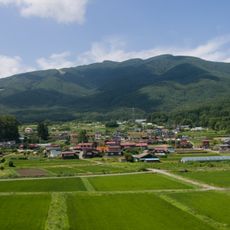
The temple stands in Takatō-machi Yamamuro, Ina, in the mountains of southern Nagano. Peonies bloom from mid-May to early June, and an admission fee is charged during that season; outside it, worship visits are free. The Shaka-dō and the small Tahō pagoda inside it are both Important Cultural Properties, so check opening arrangements before travelling.
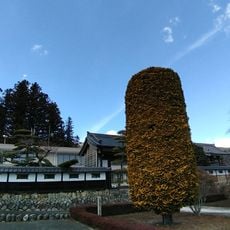
The garden is called Tsurukame-gasshō, "crane and turtle in prayer". Its turtle-island stones were kept in place when the garden was reworked in 1990 by Oguchi Motozane, who took the early-Edo rock arrangement as his model and added crane stones, a Penglai rock and a three-stone group with a cascade, following the crane-and-turtle garden by Kobori Enshū at Konchi-in in Kyoto.
The community of curious travelers
AroundUs brings together thousands of curated places, local tips, and hidden gems, enriched daily by 94,149 contributors worldwide.