Toishi-hachimangū, Shinto shrine in Japan
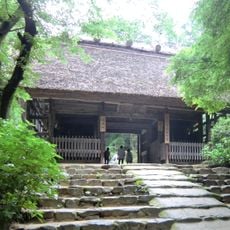
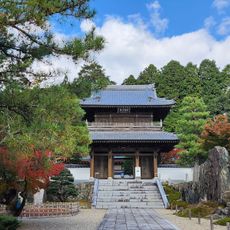
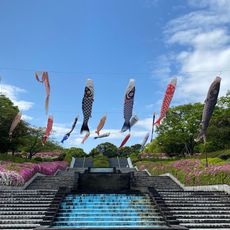
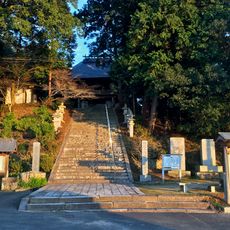
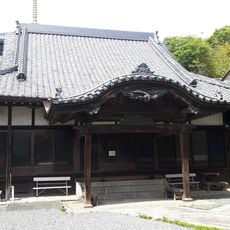
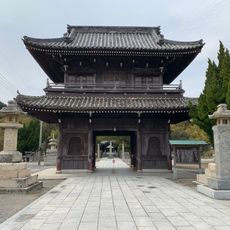
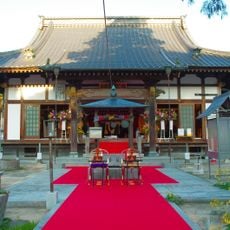
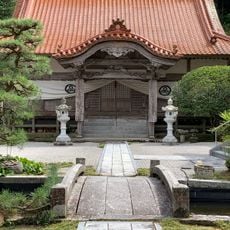
Toishi-hachimangū stands on a hill south of the Shūnan Green Park sports grounds, overlooking the Shūnan petroleum complex and the Sanyō Shinkansen line, with a view of Tokuyama Bay from beside the worship hall. Its present main hall, offering hall, worship hall, sacred-gate and surrounding fence were built in 1940, and the purification fountain in 1941; all were registered as Tangible Cultural Properties on 24 December 2013.
According to shrine tradition, the deity of Usa Hachimangū was enshrined here in 622 after an oracle declared it would protect the people from this spot. A shrine building was erected in 708, and from the Heian period it served as a branch of Iwashimizu Hachimangū. The Tokuyama domain lords later adopted it as their clan shrine.
The shrine is dedicated to Hachiman, a protective spirit associated with warriors and samurai. Visitors perform simple rituals such as washing their hands at the purification fountain and writing wishes on small wooden plaques tied to prayer boards.
The shrine stands on a hill south of the Shūnan Green Park sports ground, overlooking the Shūnan oil complex and the Sanyō Shinkansen; Tokuyama Bay is visible from beside the worship hall. To reach it, take a bus from Tokuyama Station toward Kudamatsu and get off at the Toishi-hachiman-mae stop, about 15 minutes from the station. The main buildings, including the worship hall and shrine gate, date from 1940 and the purification fountain from 1941.
The shrine grounds sit on a hill above the Shūnan petroleum complex and the Sanyō Shinkansen line, with Tokuyama Bay visible from beside the worship hall. Its head priest Kurokami Naohisa was elected mayor of Tokuyama in 1952 and later became head of the Jinja Honchō in 1983; his son Naohiro, then a negi, took over as head priest in 2015.
The community of curious travelers
AroundUs brings together thousands of curated places, local tips, and hidden gems, enriched daily by 94,828 contributors worldwide.