Konzō-ji, Buddhist temple in Kanasugi, Funabashi, Japan
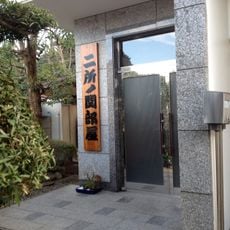
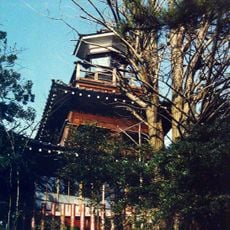
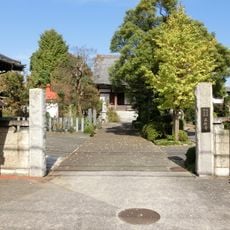
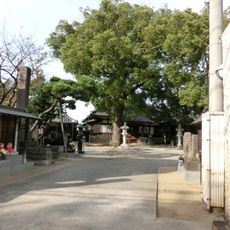
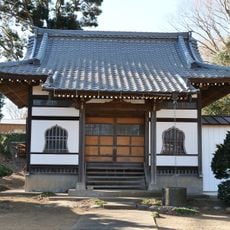
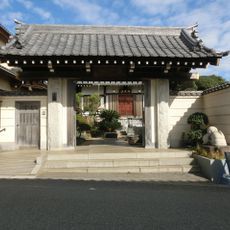
Konzō-ji is a Shingon Buzan-ha temple in Kanasugi, Funabashi, founded in 1423. Its main hall, rebuilt in 2000, enshrines a wooden Fudō Myōō statue attributed to Ennin. The grounds also hold a Daishidō with votive plaques, a Kannon hall whose ceiling shows a hundred-poem sequence by painter Kodama Teruhiko, a three-story pagoda completed in 2018, and a Niō gate about 200 years old.
Konzō-ji was founded in 1423, when the monk Nōshō Ajari from Echigo, invited by the Satake clan of Hitachi, performed a 21-day goma ritual in Kanasugi. He dug up a Fudō Myōō statue said to be carved by Ennin, and water sprang from the hole as a waterfall. During the Edo period the grounds fell within the shogunate's Kogane pasture, so the priest lived in the village and entered only in August; the temple returned after the Meiji era ended the pasture.
Konzō-ji is the 58th stop on the Yoshibashi Kōbō Daishi pilgrimage circuit of 88 sites. The temple is also known as Otaki Fudōson after its main image, a wooden Fudō Myōō statue attributed to Ennin. The Kannon Hall ceiling bears a hundred-poem sequence painted by the Japanese-style painter Kodama Teruhiko.
Konzō-ji is about 15 minutes on foot from Takifudō Station on the Keisei Matsudo Line, or 3 minutes from the Otakifudō bus stop, served by buses between Funabashi Station and Kamagaya Daibutsu or Komuro via Miyoshi. The approach from the front gate runs about 1 km, lined with statues of Kōbō Daishi marking the Shikoku 88-temple circuit.
The temple's main hall, rebuilt in 2000, houses a wooden standing Fudō Myōō attributed to Ennin, the 9th-century Tendai monk. According to the temple's founding legend, the image was unearthed here after the monk Nōshō was told of its burial in a dream.
The community of curious travelers
AroundUs brings together thousands of curated places, local tips, and hidden gems, enriched daily by 94,265 contributors worldwide.