Suma-dera, Buddhist temple in Suma-ku, Japan
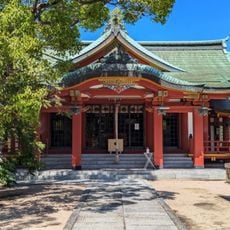
Suma-dera is a Shingon Buddhist temple in Suma-ku, Kobe, formally named Fukushō-ji, with the mountain name Jōyasan. Its main hall was rebuilt in 1602 by Toyotomi Hideyori under the supervision of Katagiri Katsumoto, and its interior palace dates to 1368. The grounds include a three-story pagoda rebuilt in 1984, a 13-story stone pagoda from the Nanboku-chō period, and a garden depicting the duel between Taira no Atsumori and Kumagai Naozane.
According to the temple's own origin account, the fisherman's statue of Kannon was enshrined at Hokubuji, and in 886 Emperor Kōkō ordered the monk Monkyō to found Fushōji on the present site, transferring that statue there. A separate temple record states that Minamoto no Yorimasa installed the main Kannon image in 1169 and donated three estates. The temple was devastated by fire in 1360 and rebuilt from 1365, and Toyotomi Hideyori had the main hall rebuilt in 1602.
The temple is known for its connection to Taira no Atsumori, the young warrior killed nearby at the 1184 Battle of Ichi-no-Tani. It keeps the Aoba no Fue, a flute attributed to him, and shows it to visitors for a fee. The grounds also hold a monument with a haiku by Matsuo Basho and, behind the temple, the grave of the free-verse haiku poet Ozaki Hōsai, who once lived in the Daishidō hall.
The temple is about a 15-minute walk uphill from JR Suma Station, with the grounds open daily from 8:30 to 17:00 and free to enter. The hillside setting involves some steps, but the main paths are well maintained and manageable for most visitors.
The temple is often introduced as a "B-grade spot" rather than a solemn heritage site, and the inns in front of it house high-school baseball teams during the summer national championship at Koshien. The haiku poet Ozaki Hōsai lived for a time as caretaker of the Daishidō hall.
The community of curious travelers
AroundUs brings together thousands of curated places, local tips, and hidden gems, enriched daily by 93,784 contributors worldwide.