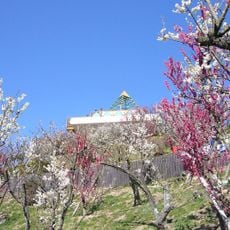
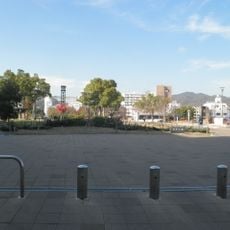
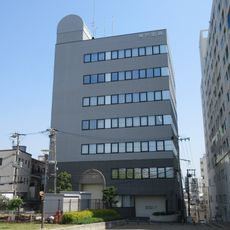
Myōhō-ji, Buddhist temple in Suma-ku, Japan.
Myōhō-ji is a Shingon Buddhist temple of the Kōyasan branch in the Bishamondake area of Myōhōji, Suma-ku, Kobe. Its formal mountain and temple name is Nyoi-zan Myōhō-ji, though it is commonly called Bishamon-zan Myōhō-ji. The grounds hold a goma hall and the Goshajinja shrine, founded by Gyōki as the temple's guardian shrine.
Founded in 738 by the monk Gyōki, Myōhō-ji was an imperial prayer temple with a seven-hall complex and 37 monks' quarters. In 1180 Taira no Kiyomori, during his Fukuhara capital plan, made it a protective sanctuary and donated 1,000 koku of temple land. In 1350–1351 Kō no Moronao's troops burned it down; it was rebuilt in 1697 and again in 1973.
The temple's name is often given as Bishamondzan Myōhō-ji, though its formal mountain name is Nyoi-zan. Its guardian shrine, Go-sha Jinja, was founded by Gyōki and honours five deities, including Ame-no-Minakanushi and Izanagi and Izanami. The wooden Bishamonten standing statue is a National Important Cultural Property, designated on 14 October 1940.
The temple stands in the Bishamonyama area of Myōhōji-chō, Suma-ku, Kobe, about a nine-minute walk east from Myōhōji Station on the Kobe Municipal Subway Seishin-Yamate Line. The grounds hold a goma hall and the Go-sha Shrine, founded by Gyōki as the temple's guardian shrine, where the deities include Amenominakanushi, Takamimusubi, Kamimusubi, Izanagi and Izanami.
The temple is commonly called Bishamondzan Myōhō-ji, but its formal mountain name and temple name are Nyoisan Myōhō-ji. The honzon is a wooden standing Bishamonten, designated an Important Cultural Property on 14 October 1940. A stone hōkyōintō pagoda dated the 23rd day of the second month of Ōan 3 (1370) was erected by the layman Jōshō and once stood on the road north to Kurumamura.
The community of curious travelers
AroundUs brings together thousands of curated places, local tips, and hidden gems, enriched daily by 94,579 contributors worldwide.