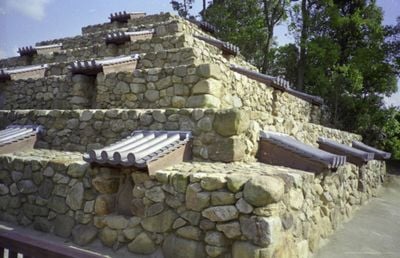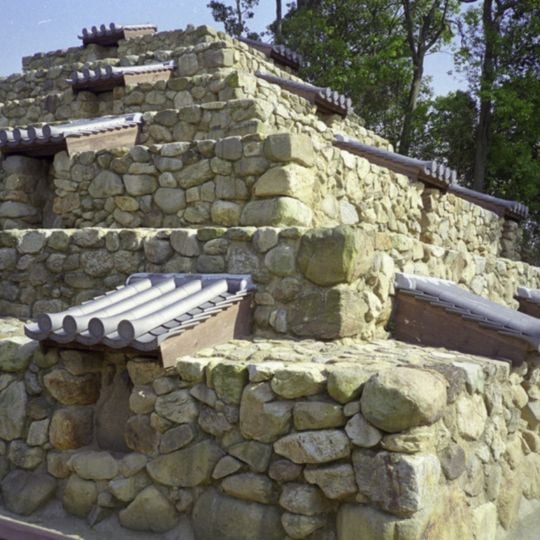
Zutō, Step pyramid in Takabatake district, Nara, Japan
Zutō is a stepped pagoda rising 10 meters high with seven tiers and stone Buddha statues positioned at ground level on each of its four sides. The structure uses earth and stone in a design that was typical of Buddhist religious buildings from that era.
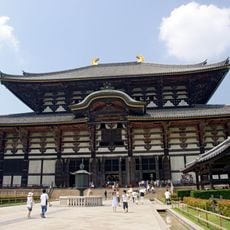
Buddhist monk Jitchu built this earthen pagoda in 767 CE during the Nara period as part of the Todaiji temple complex. The structure was created during a time when such religious buildings shaped the spiritual life of an entire region.
The structure blends Buddhist architectural principles with local building methods, and you can see 44 stone Buddha reliefs worked into its design.
Reservations are required one day ahead except during special opening periods in spring and autumn when you can visit more freely. It helps to check these seasonal windows ahead of time if you want to plan your visit carefully.
The northern half underwent archaeological excavation and restoration, while the southern section remains in its original unexcavated state. This contrast between the restored and original sections reveals how researchers have carefully studied this site over time.
The community of curious travelers
AroundUs brings together thousands of curated places, local tips, and hidden gems, enriched daily by 92,220 contributors worldwide.