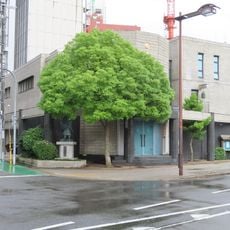
Gansenji, Buddhist temple in Naniwa-ku, Japan.
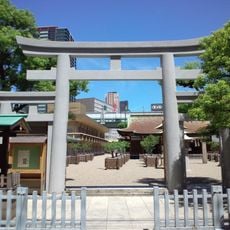
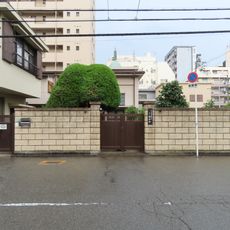
Gansenji is a Jodo Shinshu temple of the Honganji-ha school in Naniwa-ku, Osaka, at 2-27 Daikoku 2-chome. Originally a Tendai temple called Muryoji, it was moved to its present site in 1507. Its dry-landscape garden, attributed to Soami, is a prefectural scenic spot.
According to temple tradition, it was founded in 603 by Takamaro Yoshimochi (Eisho), eighth son of Ono no Imoko. In the Kamakura period it belonged to the Tendai school as Kizuyama Muryoji, a few hundred metres north-west of today's site. Burned in the Onin War, it was moved here in 1507 by the priest Teiryu, later converted to Jodo Shinshu, and rebuilt in 1597 as Gansenji.
The temple's name was changed to Gansenji in 1597 after receiving the character "gan" from Junnyo, head of the Honganji school. The temple holds a paper scroll of the six-character name, attributed to Rennyo, and nine items of Shinshu historical materials, all designated Osaka city cultural properties.
Gansenji stands at 2-27 Daikoku 2-chome in Naniwa-ku, a few minutes on foot from Daikokucho Station on the Midosuji subway line; JR Imamiya Station and the Shitsunishi 2-chome city bus stop are also nearby. The temple is an active Jodo Shinshu site, so the garden is viewed around worship activity rather than as a separate attraction.
The dry-landscape garden attributed to Soami survived the 1945 wartime fires that destroyed the temple's National Treasure-designated study and tea house, donated by Date Masamune. It was designated an Osaka Prefectural Place of Scenic Beauty on 31 March 1971.
The community of curious travelers
AroundUs brings together thousands of curated places, local tips, and hidden gems, enriched daily by 94,418 contributors worldwide.