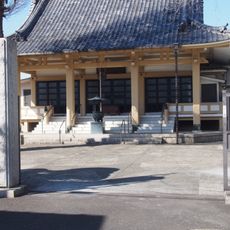
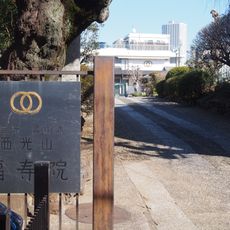
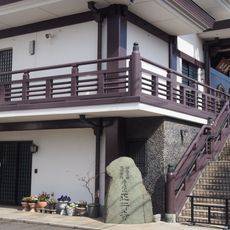
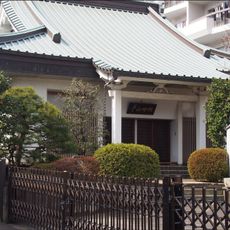
Kōenji Tenso-jinja, Shinto shrine in Suginami-ku, Tokyo, Japan
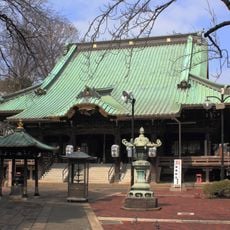
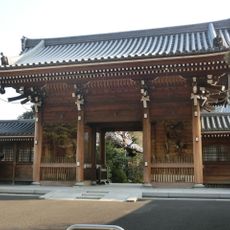
Kōenji Tenso-jinja is a Shinto shrine in Suginami-ku, Tokyo. Its worship hall (haiden) dates from September 1831 (Tenpō 2), while the offering hall (heiden) and main sanctuary (honden) were built in February 1888 (Meiji 21). The grounds contain two subordinate shrines, Mitsumine Jinja and Kiyohime Inari Jinja.
The shrine traces its origin to 1087, when a devout man named Yamashita Kyūshichi visited Ise Jingū, received a divided tutelary spirit and built a temporary hall here. The present haiden dates from September 1831 (Tenpō 2), while the heiden and honden were built in February 1888. Repairs followed in 1926 after the Great Kantō earthquake brought new residents, and in 1927 it became a village shrine (sonsha).
The shrine's name comes from Kōenji, the neighbourhood it has served since 1087, when Yamashita Kyūshichi brought a divided spirit (bunrei) from Ise Jingū and built a temporary hall here. Within the grounds stand two subordinate shrines, Mitsumine Jinja and Kiyohime Inari Jinja; a third, Tanaka Inari Jinja, lies outside the precinct. The shrine became a village shrine (mura-sha) in 1927.
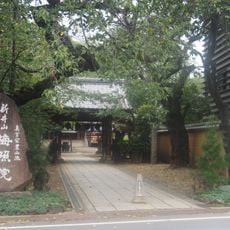
Kōenji Tenso-jinja is a three-minute walk from Higashi-Kōenji Station on the Tokyo Metro Marunouchi Line. Entry to the grounds is free, and the shrine stands in a residential part of Suginami-ku, so the approach is through ordinary streets rather than a temple district.
The shrine's subordinate Miiwa Shrine and Kiyohime Inari Shrine stand within the grounds, while Tanaka Inari Shrine lies outside them. The Kiyohime name recalls the legend of Kiyohime, the woman of the Dojo-ji tale, a figure linked to serpent transformation.
The community of curious travelers
AroundUs brings together thousands of curated places, local tips, and hidden gems, enriched daily by 95,085 contributors worldwide.