Nigitsu Shrine, Shinto shrine in Japan
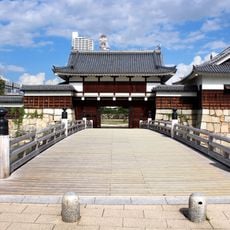
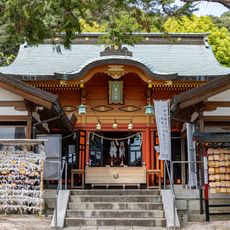
Nigitsu Shrine is a Shinto shrine in Higashi-ku, Hiroshima, founded in 1706 by Asano Tsunanaga as a memorial hall for Asano Nagamasa. Its main deities are Asano Nagamasa, Yoshinaga and Nagaakira, with Yayako, Nagamasa's wife, enshrined alongside. The grounds hold a reconstructed main hall, worship hall, and a Tang gate rebuilt in 2000, said to be the second largest in Japan.
The shrine was founded in 1706 by Asano Tsunanaga as a memorial to his family and underwent major renovations in 1810 and 1835 before receiving its present name in 1873. The atomic bombing in 1945 destroyed most structures, but subsequent rebuilding between 1984 and 2005 restored the main shrine, worship hall, and traditional gates.
Locals call the shrine "Nigitsu-san," and its main deities are the Asano lords Nagamasa, Yoshinaga and Nagaakira, with Nagamasa's wife Yayako enshrined alongside them. An Inari shrine within the grounds honours Ukanomitama-no-Mikoto. The shrine's name changed from Futaba Gōsha to Nigitsu Jinja in 1873.
From the shinkansen exit (north side) of Hiroshima Station, walk west for about 15 minutes. The Nigitsu bus stop is a one-minute walk away, served by Hiroden bus line 5 and by lines 32 (Hiroshima Kotsu, JR Bus Chugoku). The grounds are open year-round.
The shrine grounds sheltered many bomb victims after the 1945 blast, and most of them died there. The novelist Hara Tamiki, who crossed the Kyobashi River and camped near the shrine, described that night in his story "Summer Flowers". Only stone lanterns, a water basin and about a dozen pines survived among the buildings.
The community of curious travelers
AroundUs brings together thousands of curated places, local tips, and hidden gems, enriched daily by 94,048 contributors worldwide.