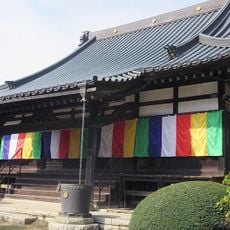
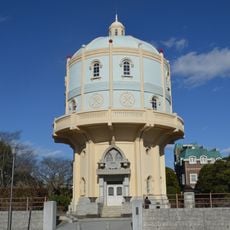
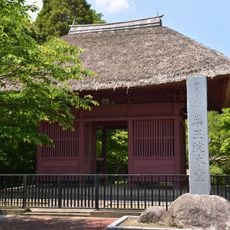
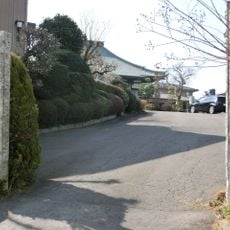
Jinnō-ji, Buddhist temple in Mito, Japan.
Jinnō-ji is a Jishū (Yugyō-ha) temple in Moto-yama-chō, Mito, founded in 1591 as a Fujisawa dōjō and renamed in 1633. Its grounds hold a large cemetery with the graves of Wada Heisuke Masakatsu, a reviver of the Tamiya school of iaijutsu, and the military scholar Yamaguni Hyōbu Tomomasa with his brother Tamaru Inanoemon Naomasa. A Kechiage Kannon, venerated against lightning, stands on the site; its honzon remains at the temple.
Jinnō-ji began in 1591 when the Jishū monk Tahō Fuke, a member of the Satake clan, founded a Fuzefuda dōjō in the Kōda district of Mito, then briefly the headquarters of the Jishū Yūgyō school. It received its present name in 1633 after the restoration of its mother temple, and in 1680 it was moved to its current site in Motoyama-chō.
The temple's name was changed to Jinnō-ji in 1633, after the restoration of Kiyō Hikari-ji, and it was moved to its present Moto-yama-chō site in 1680. Its cemetery holds the graves of Wada Heisuke Masakatsu, who revived the Tamiya school of iaijutsu, and the military scholar Yamaguni Hyōbu Tomomasa with his brother Tamaru Inanoemon Naomitsu.
Jinnō-ji lies in Moto-yama-chō, Mito. The nearest access is by bus: take a Kantō Railway bus from Mito Station on the JR Jōban or Suigun lines and get off at the Daiku-machi stop, from which the temple is immediately reached. The grounds contain a large cemetery, so expect to walk among graves.
The temple keeps the honzon of the Kechiage Kannon, a figure worshipped for protection against lightning. A separate shrine to Honoikazuchi no Okami once stood on the grounds but became independent after the 1868 separation of Shinto and Buddhism; the original Buddhist image remains at Jinnō-ji.
The community of curious travelers
AroundUs brings together thousands of curated places, local tips, and hidden gems, enriched daily by 94,141 contributors worldwide.