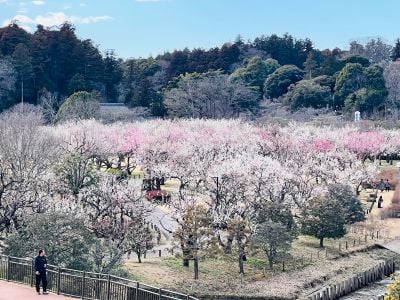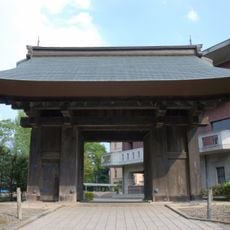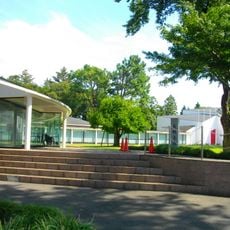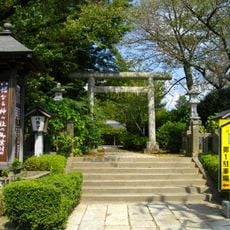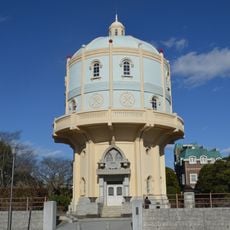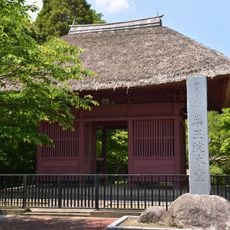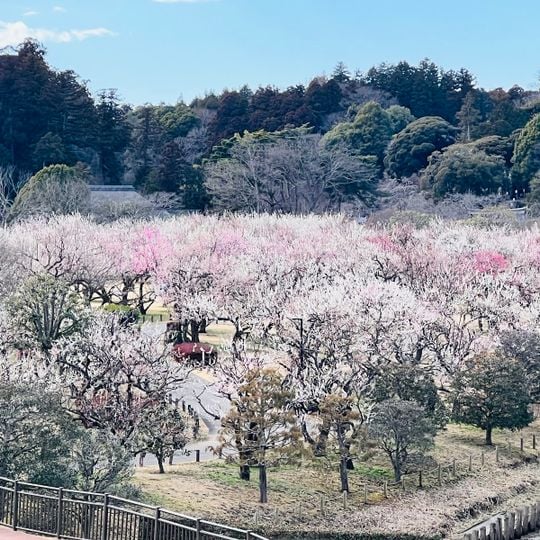
Kairaku-en, Japanese garden in Mito, Japan.
Kairaku-en is a landscape garden in Mito, Ibaraki Prefecture, that spreads over a wide area near the shore of Lake Senba and is known for its plum groves with thousands of trees in many varieties. Bamboo thickets and old cedar stands divide the grounds into different zones, while ponds and pavilions provide rest points along the walking paths.
Feudal lord Tokugawa Nariaki commissioned the garden in 1842 and deliberately opened it to people of all ranks, which was an innovation at the time. After the feudal era ended, the grounds remained publicly accessible and were recognized as a national cultural property in the 20th century.
The name comes from a passage in Mencius: "the ancients shared their pleasures with the people, and so were able to enjoy themselves." Tokugawa Nariaki's own inscription states this intent, and from the Edo period the garden opened to commoners on every day containing a three or an eight. The plum alias kobunboku, "tree of fond learning," gave the villa Kobuntei its name.
Access is possible throughout the year, with paths busiest in spring during bloom time and in autumn for the foliage. On hot summer days the forests and pavilions offer shade, while in winter fewer visitors are around and the grounds feel quieter.
During bloom time between late February and March, an additional station stop is opened especially for garden visitors. Outside these weeks the small platform remains closed and trains pass without stopping.
The community of curious travelers
AroundUs brings together thousands of curated places, local tips, and hidden gems, enriched daily by 93,269 contributors worldwide.