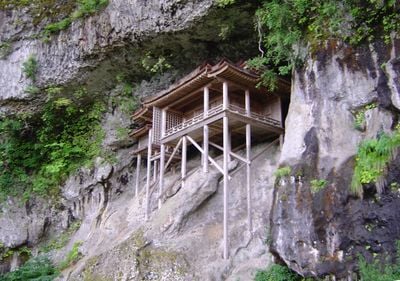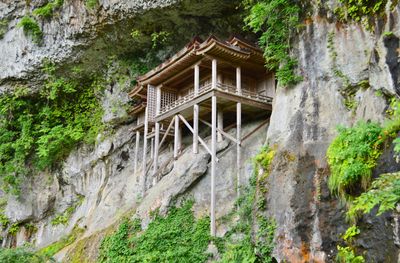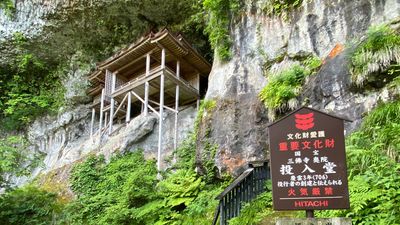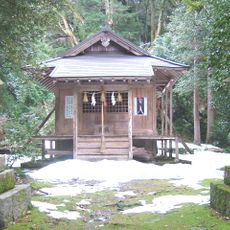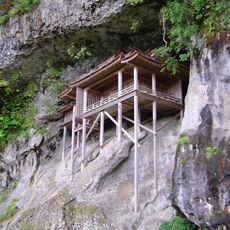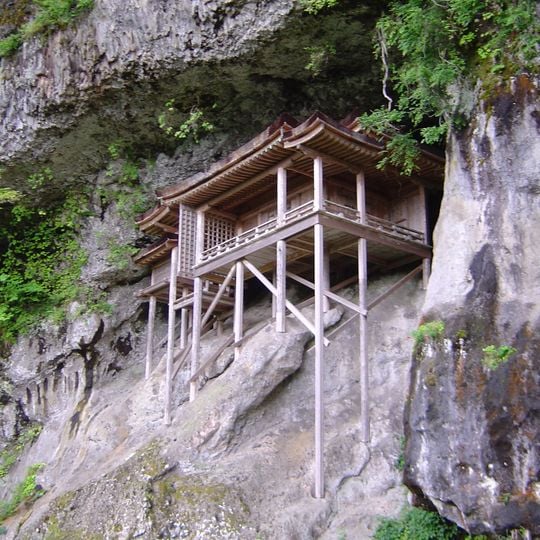
Nageire-dō, Buddhist temple hall at Mount Mitoku, Japan
Nageire-dō is a wooden temple hall built into a cliff on Mount Mitoku using the kakezukuri technique, which involves anchoring the structure to the rock face. The hall rests on slender wooden pillars embedded directly into the stone, with a traditional curved roof sheltering a single prayer chamber.
The temple hall was built during the Heian period around 1200 and demonstrates the skill of Japanese craftsmen in creating religious sites on remote mountain slopes. It was later recognized as a National Treasure and stands as one of the finest examples of medieval mountain architecture.
The structure belongs to the Tendai Buddhist sect and serves as a meditation space where monks practice Shugendō, combining Buddhist and Shinto mountain worship.
The approach requires hiking along narrow trails with metal chains and wooden ladders, and sturdy footwear with good grip is necessary. The route is suitable only for visitors with steady footing, as some sections are steep and exposed.
The name literally means "thrown-in hall" and refers to a legend in which the founder of mountain asceticism hurled the building into its clifftop position from a distant valley. Local guides still repeat the story to explain the seemingly impossible location of the wooden structure.
The community of curious travelers
AroundUs brings together thousands of curated places, local tips, and hidden gems, enriched daily by 91,805 contributors worldwide.