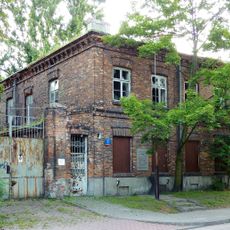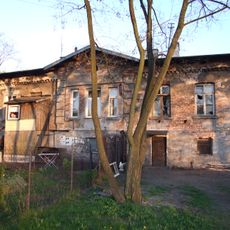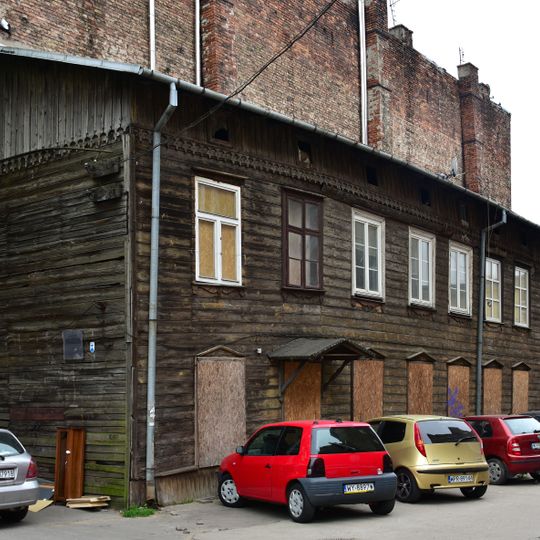
Oficyna Burkego, Wooden heritage house in Praga-Północ district, Warsaw, Poland.
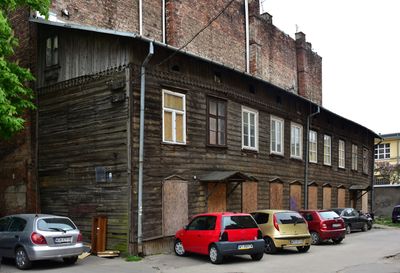
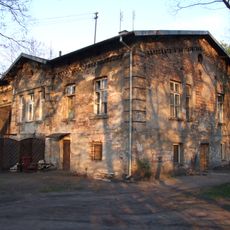
Oficyna Burkego is a wooden outbuilding at Kawęczyńska Street 26 in Warsaw's Praga-Północ district, built around 1900 as the oldest part of Edmund Burke and Józef Wągrowski's residential complex. It stands along the eastern edge of the plot, gable end facing the street, as a single-bay, one-storey structure with a ten-axis facade, doors on the second and ninth axes, a lean-to roof and wooden ornament in the attic band and under the window cornices. The street wall is blind.
The oldest part of Edmund Burke and Józef Wągrowski's residential complex, the oficyna was built around 1900; the brick front building of the complex has not survived. After 1945 it became a municipal house. The last tenant moved out in 2016, and in 2019 the roof was collapsed, ceilings damaged and walls leaning from the vertical. In 2020 claims to the property were disclosed.
This wooden structure shows how residents lived in the Praga district during the late 1800s and early 1900s. The building reflects the housing patterns and daily life of ordinary families in this part of Warsaw.
The building stands at Kawęczyńska 26, along the eastern edge of the plot with its gable facing the street; the street-side wall is blind. It was entered in the monument register in 2015, and by 2019 its roof had collapsed, its ceilings were damaged and its walls leaned from the vertical. View it from the street; claims to the property were disclosed in 2020.
The street-facing wall of the oficyna is blind, with no windows, and the entrances sit on the second and ninth axes of the ten-axis facade. Wooden ornament runs along the attic band and beneath the window-sill cornices. The building was entered in the monument register in 2015 as a relic of wooden housing in Praga.
The community of curious travelers
AroundUs brings together thousands of curated places, local tips, and hidden gems, enriched daily by 93,981 contributors worldwide.