Naaran, Ancient synagogue ruins near Jericho, Palestine.
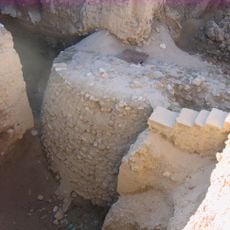
Naaran is an ancient synagogue with ruins located near Jericho, where preserved mosaic flooring features geometric patterns and partially erased zodiac designs. The site sits in an archaeological area northwest of central Jericho and contains remains from the Byzantine period.
The site was first exposed in 1918 when Turkish shelling during World War I uncovered parts of a mosaic; in 1921 Dominican monks revealed the floor, and pieces with Aramaic dedications and seven-branched menorahs were taken to the Dominican École biblique in Jerusalem. The ruins were later reburied and rediscovered by an Israeli army unit digging a latrine. The mosaic, dated to the 6th century under Justinian I or II, was excavated by Louis-Hugues Vincent and Marie-Joseph Lagrange.
The Aramaic dedication on the mosaic's northern edge names Halifa bat Rabbi Safra, who donated to the holy place. Above it, animal figures include a lion, buffalo, rooster and peacock. The faces of the zodiac figures were damaged, likely in the 8th century.
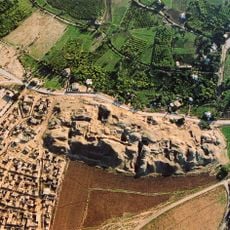
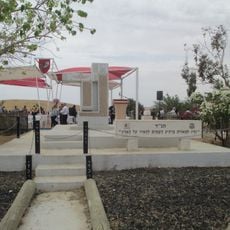
The ruin stands on the grounds of Kibbutz Naaran, about 5 km north of Jericho, near the village of Nu'eima on the eastern side of Wadi Mukhuk, and is fenced and locked; access must be arranged in advance. The mosaic lies under a protective roof inside a grove, with a restaurant and hotel next to the site.
The faces of the figures in the zodiac wheel were deliberately damaged, probably in the 8th century, perhaps under the influence of an iconoclastic Jewish movement centred in Galilee; researcher Asher Ovadia links this to the figureless floor of the Jericho synagogue. Some scholars dispute both the movement and this reading.
The community of curious travelers
AroundUs brings together thousands of curated places, local tips, and hidden gems, enriched daily by 94,503 contributors worldwide.