Deir Hajla, Greek Orthodox monastery in Jericho Governorate, Palestine
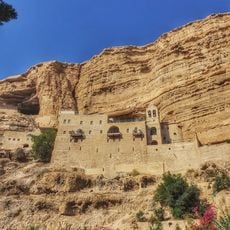
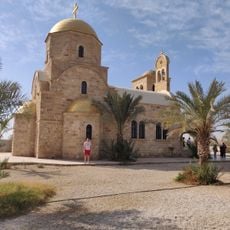
Deir Hajla is a Greek Orthodox monastery built around a stone-paved, open courtyard with a water cistern at its centre. The ground floor holds the kitchen, refectory, a small chapel and souvenir stalls; the main church and monks' cells are on the upper floor. The church has a large metal-clad dome and walls painted with frescoes of Byzantine desert monks.
Founded in 455 by Saint Gerasimus, the monastery stood about 1.5 km from the Jordan and housed 70 monks. Persians destroyed it in 614; it was rebuilt by 640, merged with the neighbouring Monastery of Malawn, and took the Arabic name Deir Hijle. Crusader-era rebuilding under Patriarch John IX was followed by earthquakes, and the Greek Orthodox Patriarchate restored the present structure in 1890 after the 1837 quake.
Monks work in a mosaic workshop creating religious artworks depicting scenes from the Holy Land. Visitors can observe how this craft remains an active part of daily monastic life here.
The monastery sits roughly 3.5 kilometers west of the Jordan River and welcomes visitors daily during daytime hours. It is helpful to contact the site ahead of your visit to confirm current conditions and any special access requirements.
The cave church where the Holy Family is said to have spent a night lies about 1.5 km from the Jordan, at the site of the original Gerasimus monastery, not in the crypt of today's building. The crypt under the main church instead holds glass cases with the bones of monks killed by the Persians in 614 and of victims of the 19th-century earthquake, plus wax models of infants and limbs left as votive offerings.
The community of curious travelers
AroundUs brings together thousands of curated places, local tips, and hidden gems, enriched daily by 93,116 contributors worldwide.