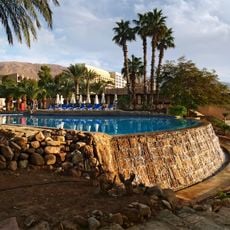
Ein Feshkha, Nature reserve near Dead Sea, Palestine
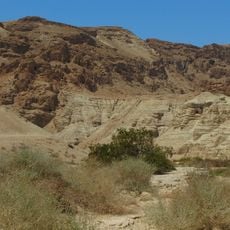
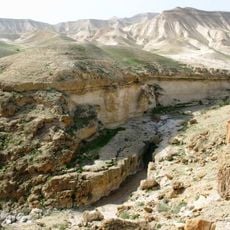
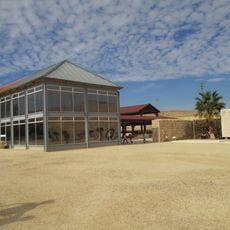
Ein Feshkha is a nature reserve along the Dead Sea coast, situated in a narrow strip between mountains and water. Freshwater springs feed the area, creating mineral pools and supporting dense plant growth that thrives in this unusual setting.
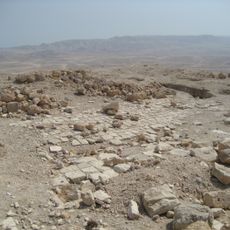
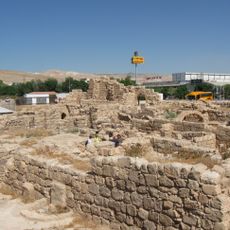
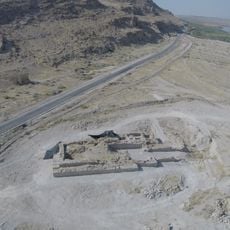
A small fenced farm excavated in 1958 by Father Roland de Vaux and re-examined in 2001 by Yizhar Hirschfeld stood in the open reserve. Occupied from the 1st century BCE, it was destroyed in the Great Revolt and resettled until the Bar Kokhba Revolt. Its rooms, stables and sheep pen surrounded an open courtyard, with walls of fieldstone and doors and lintels of palm wood.
The Arabic name 'Ain el-Feshkhah means "the spring of el-Feshkhah", Feshkhah being either a personal name or a word with no meaning. The nearby farm produced the costly persimmon perfume (afarsemon) from the 1st century BCE until the Bar Kokhba revolt, crushing and steeping the shrub's branches; some scholars instead read the installation as a date-syrup and date-wine workshop.
You can walk on marked trails through the open areas and swim in natural pools. The early morning or late afternoon offers the most comfortable conditions for exploring the reserve.
The reserve's saline wetlands are the only known place where Blue and Dead Sea killifish (Nevit Hula and Nevit Yam Hamelakh) live side by side; the Israel Nature and Parks Authority and the Ministry of Agriculture built pools there that now hold tens of thousands of fish. In 1900 R. A. Stewart Macalister had a stonemason carve an 8–9-inch line marked "PEF" into a rock above the shore, used for Dead Sea level measurements until 1913.
The community of curious travelers
AroundUs brings together thousands of curated places, local tips, and hidden gems, enriched daily by 93,145 contributors worldwide.