Barrocal, Natura 2000 site of community importance in the Algarve, Portugal
Barrocal is a natural sub-region of the Algarve between the Serra and the coast, crossing the region lengthwise and wider in its central part. It is a limestone landscape of irregular hills called barrocos that rarely exceed 400 metres, with holm oak woods, degraded scrub of wild olive and myrtle, and small carob trees.
The Barrocal is a natural sub-region of the Algarve running between the Serra and the coast, with limestone hills called barrocos rarely exceeding 400 metres. Its endemic cover was once dominated by holm oak woodland, but centuries of human activity left scrub of wild olive, myrtle and small carob trees. In recent decades irrigated crops and vines expanded onto former dryland plots, and much farmland is now abandoned.
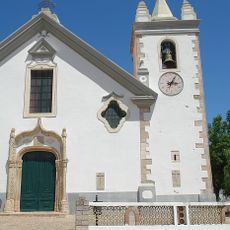
The name Barrocal comes from the barrocos, the irregular limestone hills that rarely exceed 400 metres. Almond, fig, carob and olive trees were grown here for centuries, with citrus in the valleys; in recent decades irrigated crops and vines have expanded onto former dryland plots, and much farmland now lies abandoned. Alte, one of the Algarve's most typical villages, lies within the area.
The Barrocal runs lengthwise through the Algarve between the Serra and the coast, and is wider in its central section than at its ends. Loulé lies within it, as do Estoi, Paderne, Santa Bárbara de Nexe, Santa Catarina da Fonte do Bispo and Tunes. Its limestone hills, the barrocos, rarely rise above 400 metres. Walking is on dry, exposed ground, so carry water and wear sturdy shoes.
The caves of the Barrocal shelter animals that live only underground, among them the giant pseudoscorpion Titanobochica magna, the Portuguese cave dipluran Litocampa mendesi and the giant silverfish Squamatinia algharbica. These endemic species depend on the subterranean environment and are rarely seen by visitors.
The community of curious travelers
AroundUs brings together thousands of curated places, local tips, and hidden gems, enriched daily by 94,076 contributors worldwide.