Libida, Archaeological site in Slava Rusă, Romania.
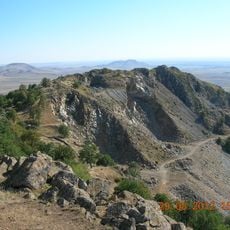
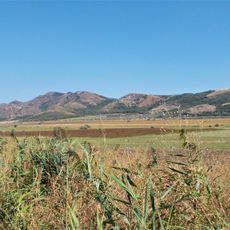
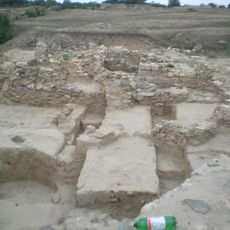
Libida, also called Ibida, lies by Slava Rusă in Tulcea County. The city occupied flat ground within walls enclosing about 24 ha, with a fort of about 3.5 ha attached on Harada hill to the southwest. Pamfil Polonic recorded 33 towers and 3 gates in 1897; the northern stretch of the walls has been excavated, along with a Christian basilica.
The settlement began as a Getic community in early times and evolved into a Roman center that thrived for centuries. It was eventually abandoned following invasions that disrupted life in the region.
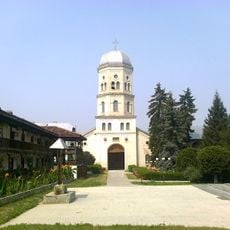
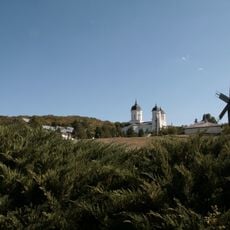
The name Ibida was given to the site by Constantin Moisil in 1916, the year a hoard of drachmae coins came to light here. A three-naved basilica excavated in the city and a Byzantine-era monastic complex about 2.5 km to the west show the Christian phase of the settlement. The basilica's three aisles were uncovered in 1917 by the Bulgar lieutenant Iconomof.
The site sits on elevated ground, so visitors should be prepared for some walking uphill through the excavation areas. Sturdy footwear is advisable, and bringing water or sun protection will make the visit more comfortable during exploration.
In 1916 a hoard of silver drachmae was found at the site, and Constantin Moisil used it that year to name the town Ibida. The coins point to trade links reaching the Greek world, long before the great walls of the Tetrarchy were built.
The community of curious travelers
AroundUs brings together thousands of curated places, local tips, and hidden gems, enriched daily by 94,658 contributors worldwide.